
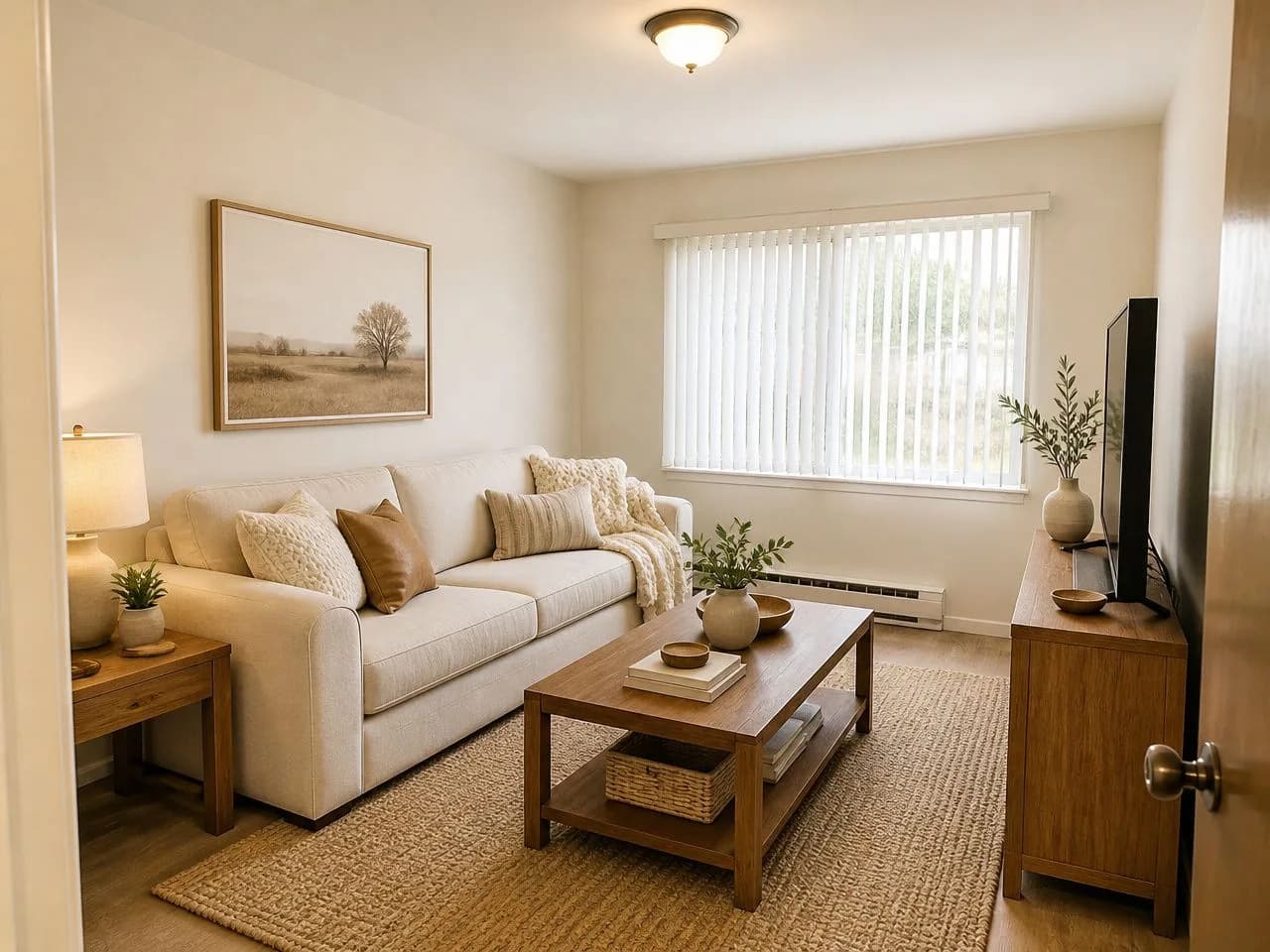
Warm Minimalist
Calm and uncluttered, but never cold.
Clean lines softened by oak, walnut, linen and wool. Fewer things, each one chosen, in a palette of cream, oatmeal and warm wood.
Warm Minimalist guide8 questions · no email · 2 minutes · 16 real styles
Go with your gut.
By Kamil Uhryn, founder of Decoratly · Updated November 2026 · How the quiz works
Your decorating style is the pattern in the rooms, colors, materials and furniture you keep choosing. Look at the last ten rooms you saved, or the five things you would never get rid of at home: what they share is your style. Most people land on a mix of two or three, not one.
Nine common signals and the interior design styles they usually belong to. Tap a style for its guide.
Pale walls, light oak, linen and plenty of empty space
Usually means
Deep green or navy walls, books and brass lamps
Usually means
Every result is a real style in the Decoratly app. To make them easy to compare, each one is the same living room, redesigned by the app in that style.
Calm and uncluttered, but never cold.
Clean lines softened by oak, walnut, linen and wool. Fewer things, each one chosen, in a palette of cream, oatmeal and warm wood.
Warm Minimalist guide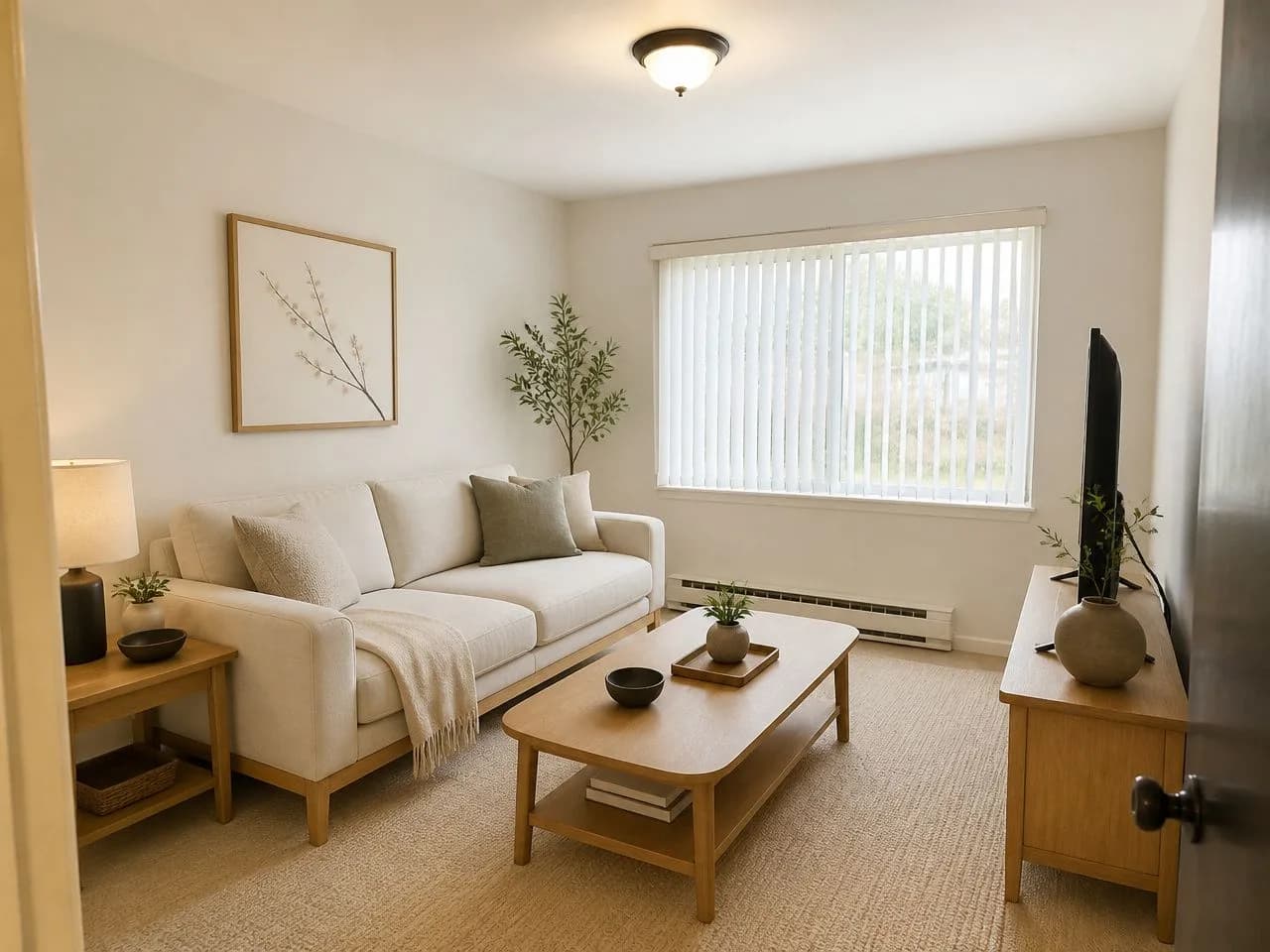
Japanese calm meets Scandinavian comfort.
Low, simple furniture, natural materials and plenty of breathing room. Muted earth tones, a little black for contrast, and objects that are beautiful because they are useful.
Japandi guide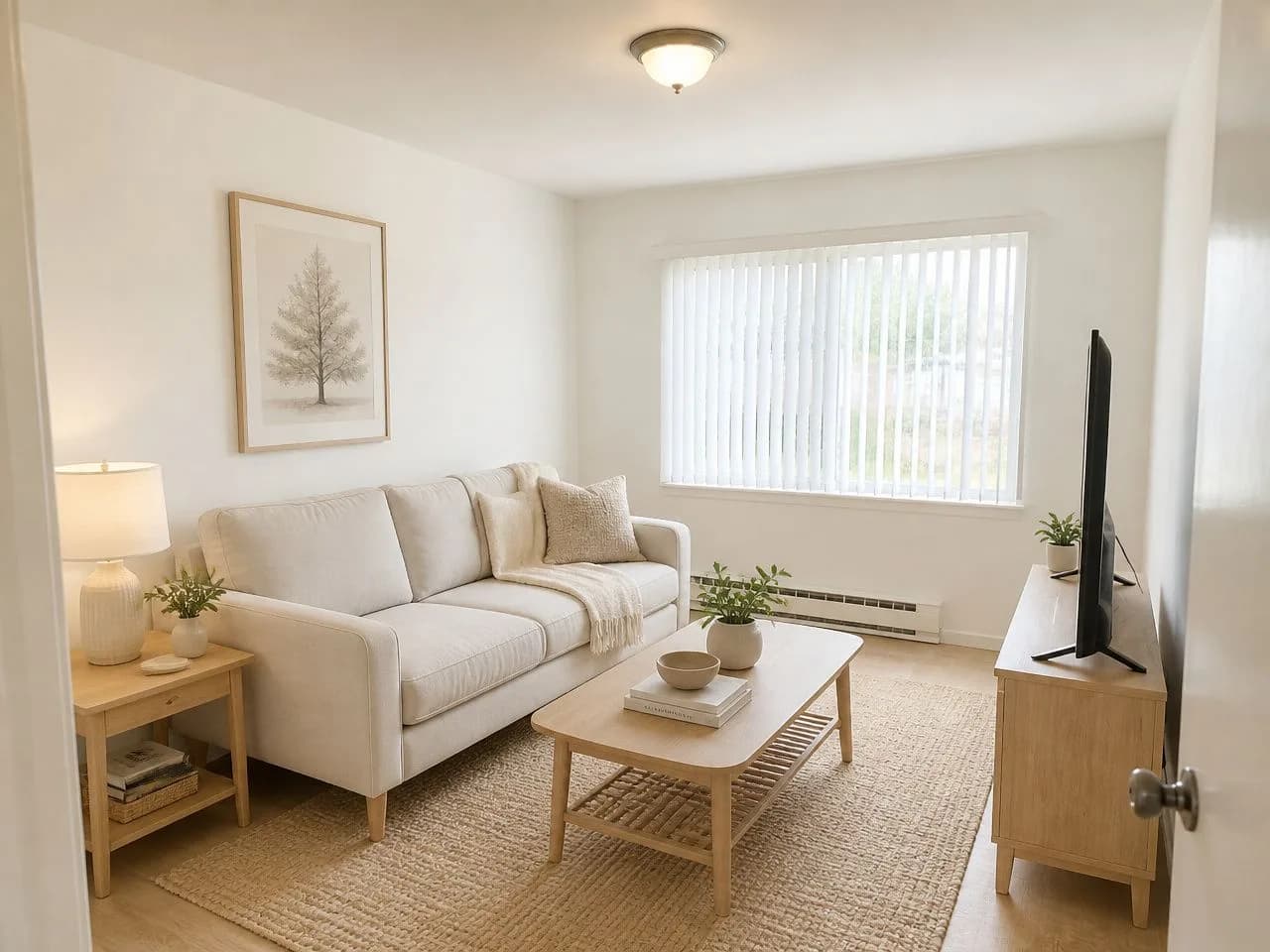
Light, simple and made for real life.
Pale walls that bounce daylight, light woods and cosy textiles. Practical and uncluttered, warm in a quiet way.
Scandinavian guide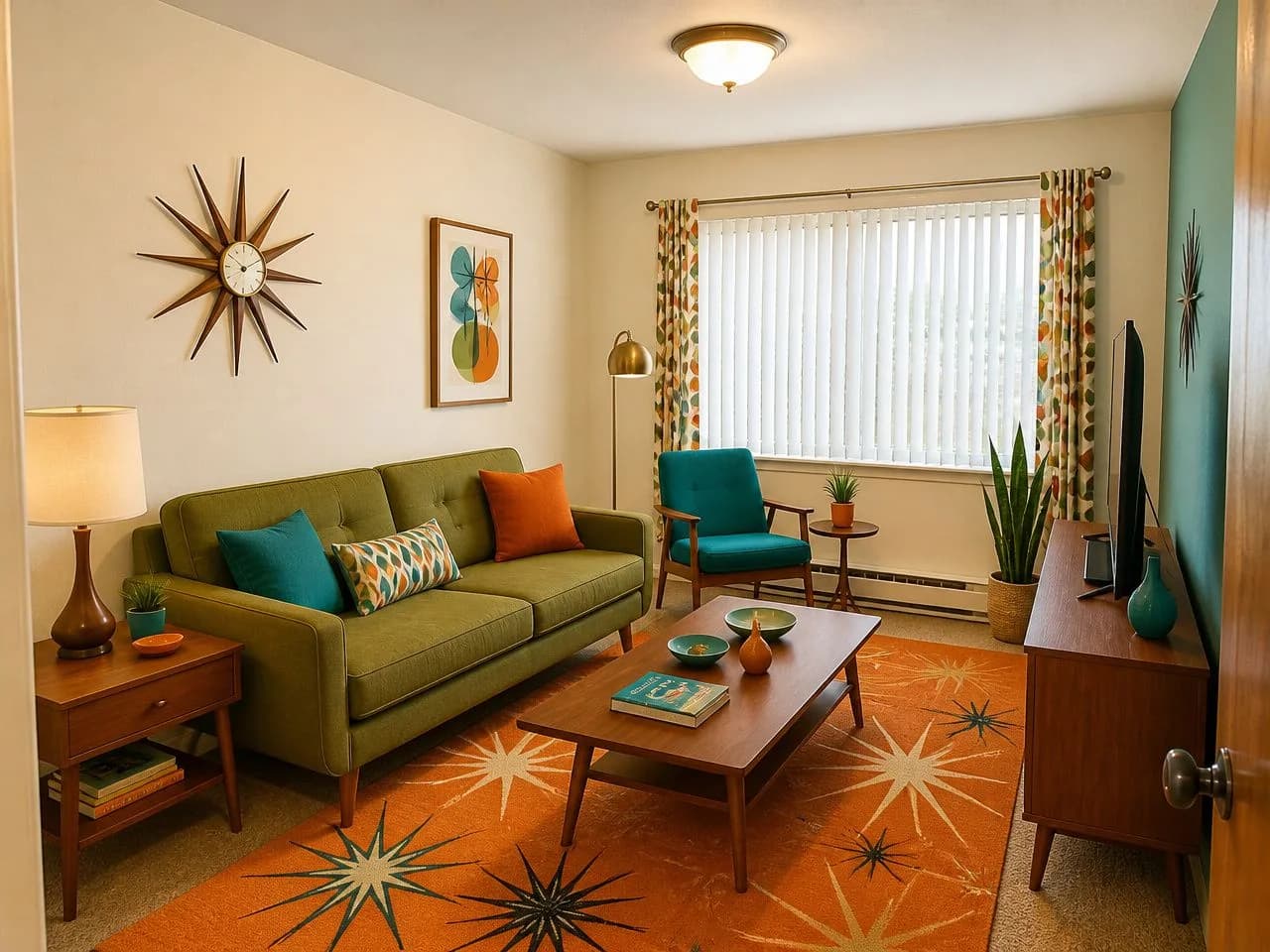
Retro shapes that still feel fresh.
Walnut, tapered legs and soft curves from the 1950s and 60s, with pops of mustard, teal and rust. Graphic, warm and easy to live with.
Mid-Century Modern guide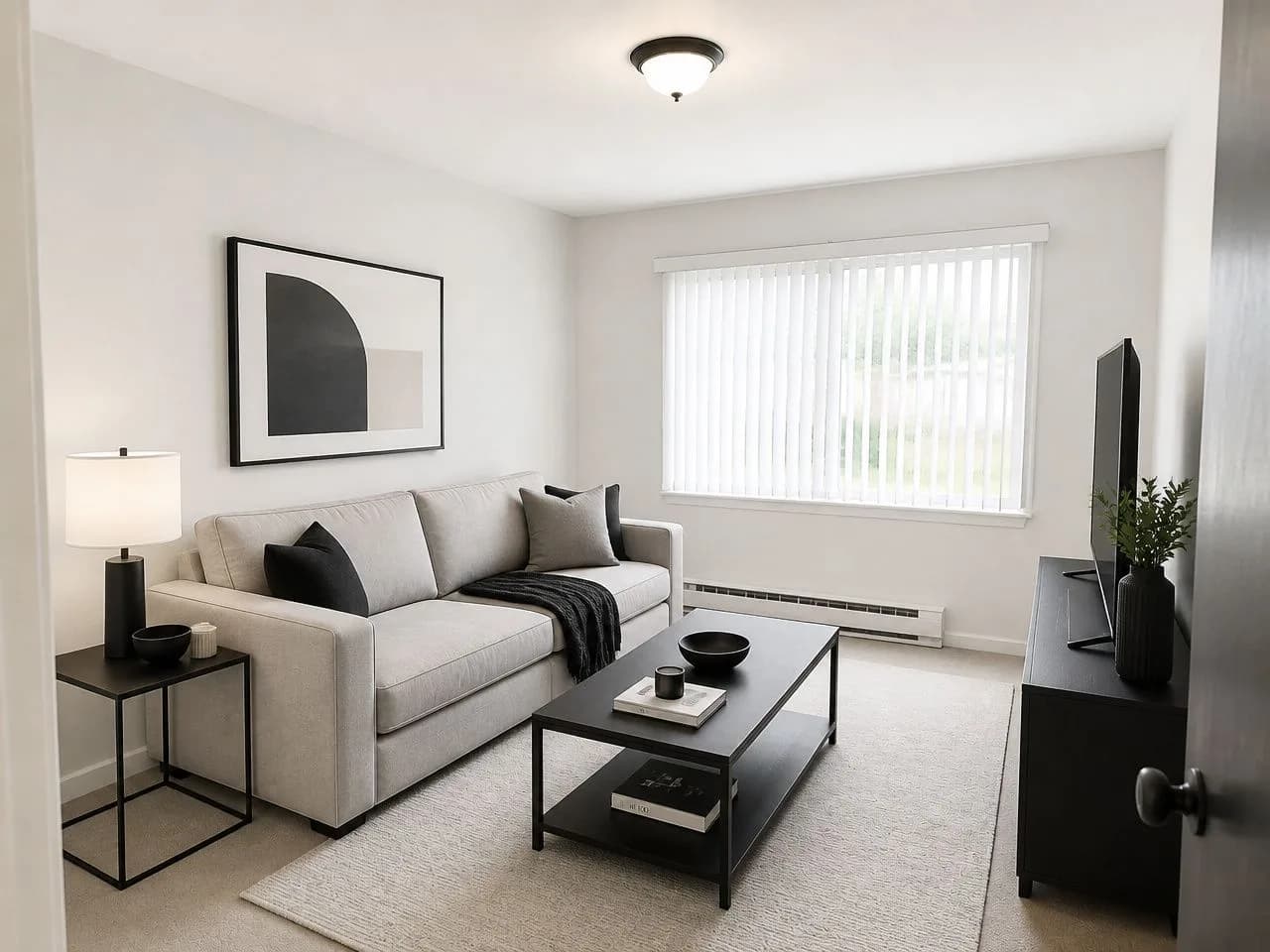
Crisp, quiet and completely uncluttered.
A restrained palette, sharp lines and almost nothing on display. Every piece earns its place, and the room feels calm because it is quiet.
Modern Minimal guide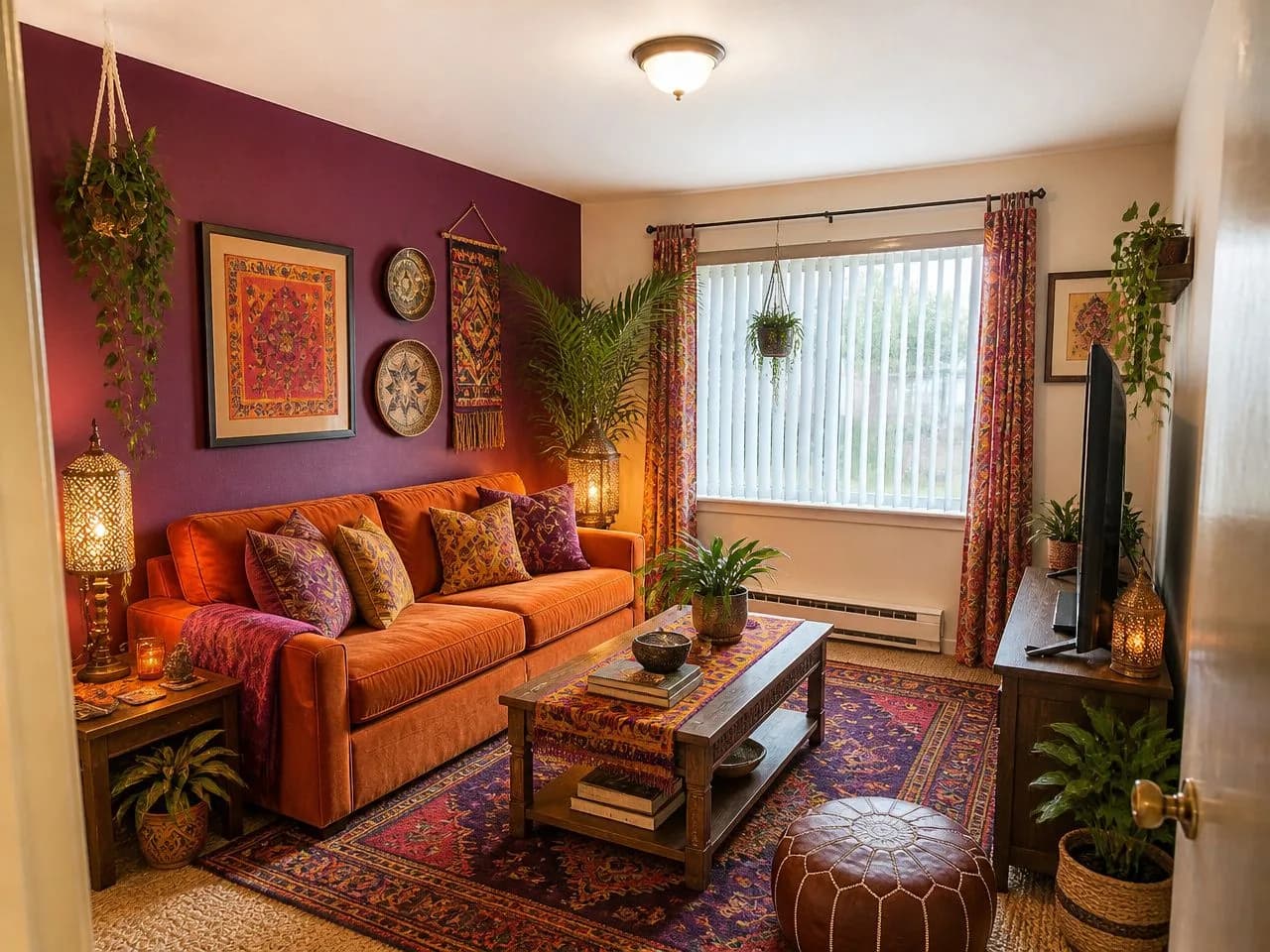
Collected, colorful and full of stories.
Layered rugs, global textiles, plants and things picked up over the years. Relaxed, personal and a little unpredictable.
Bohemian guide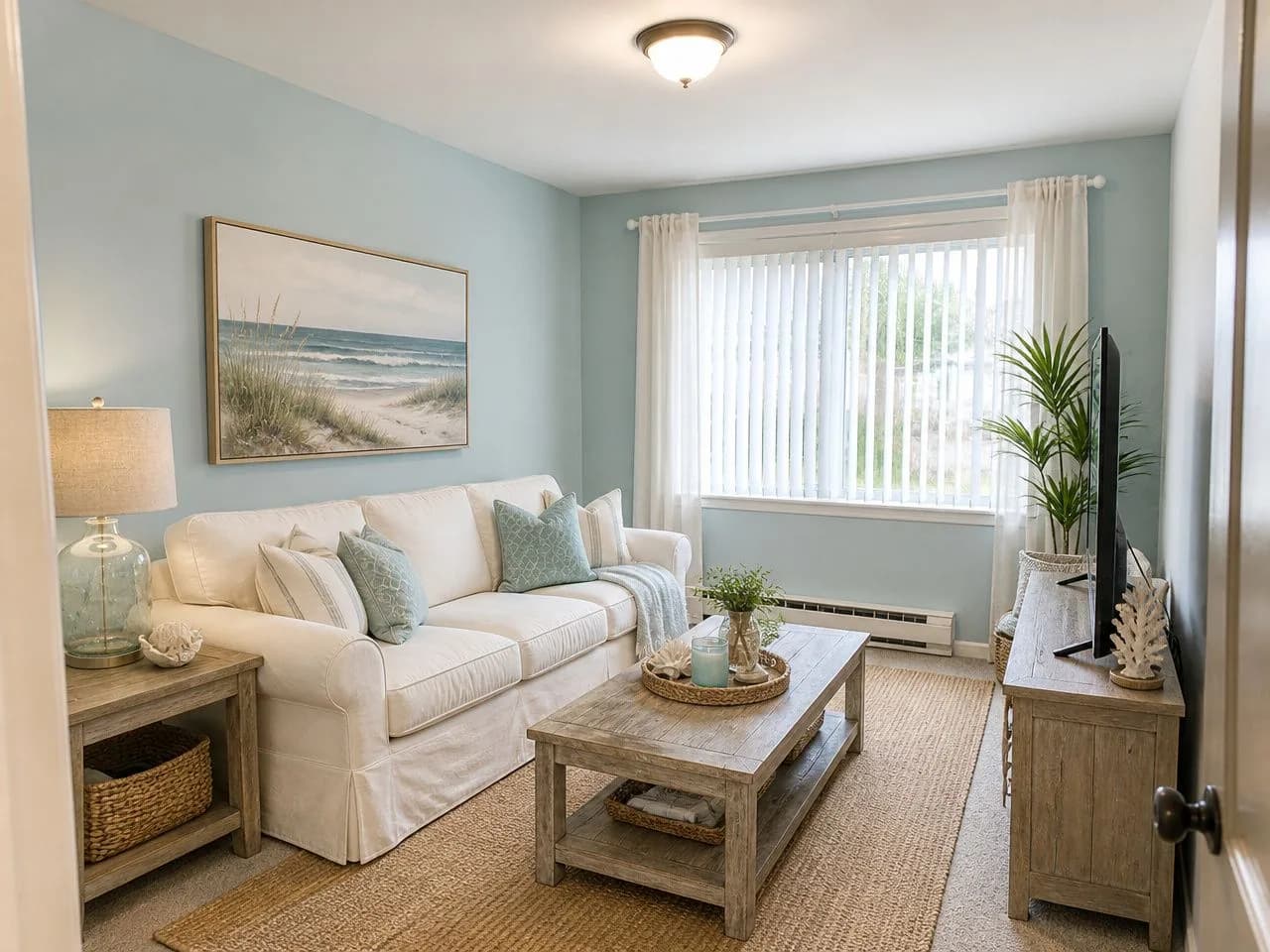
Breezy, bright and easy.
Sandy neutrals, soft blues and natural textures that feel like a beach house, without shells on every shelf. Fresh, relaxed and full of light.
Coastal guide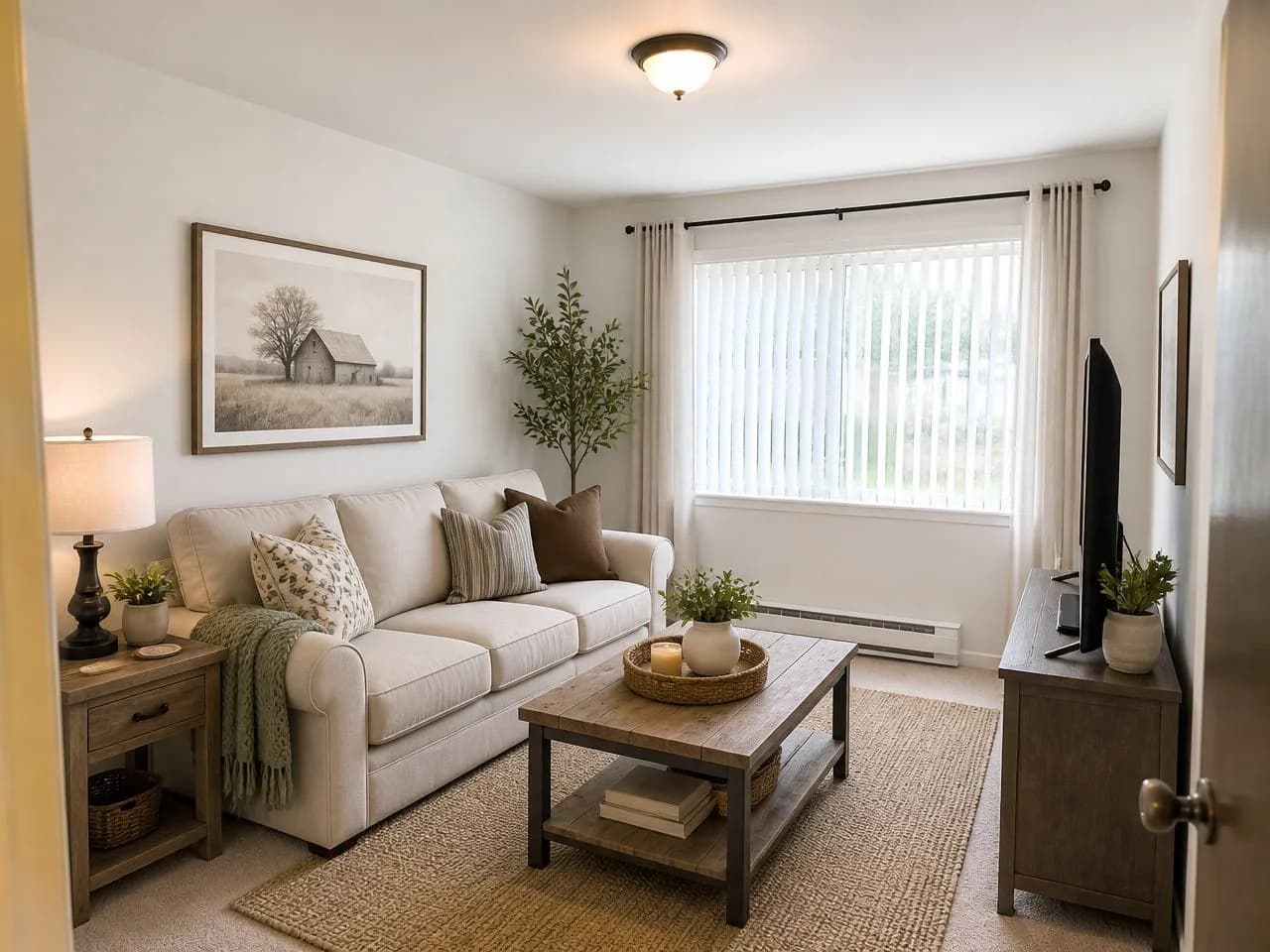
Cosy, practical and rooted.
Shiplap, warm wood and black metal, with comfortable furniture made for everyday life. Rustic charm, kept clean and modern.
Modern Farmhouse guide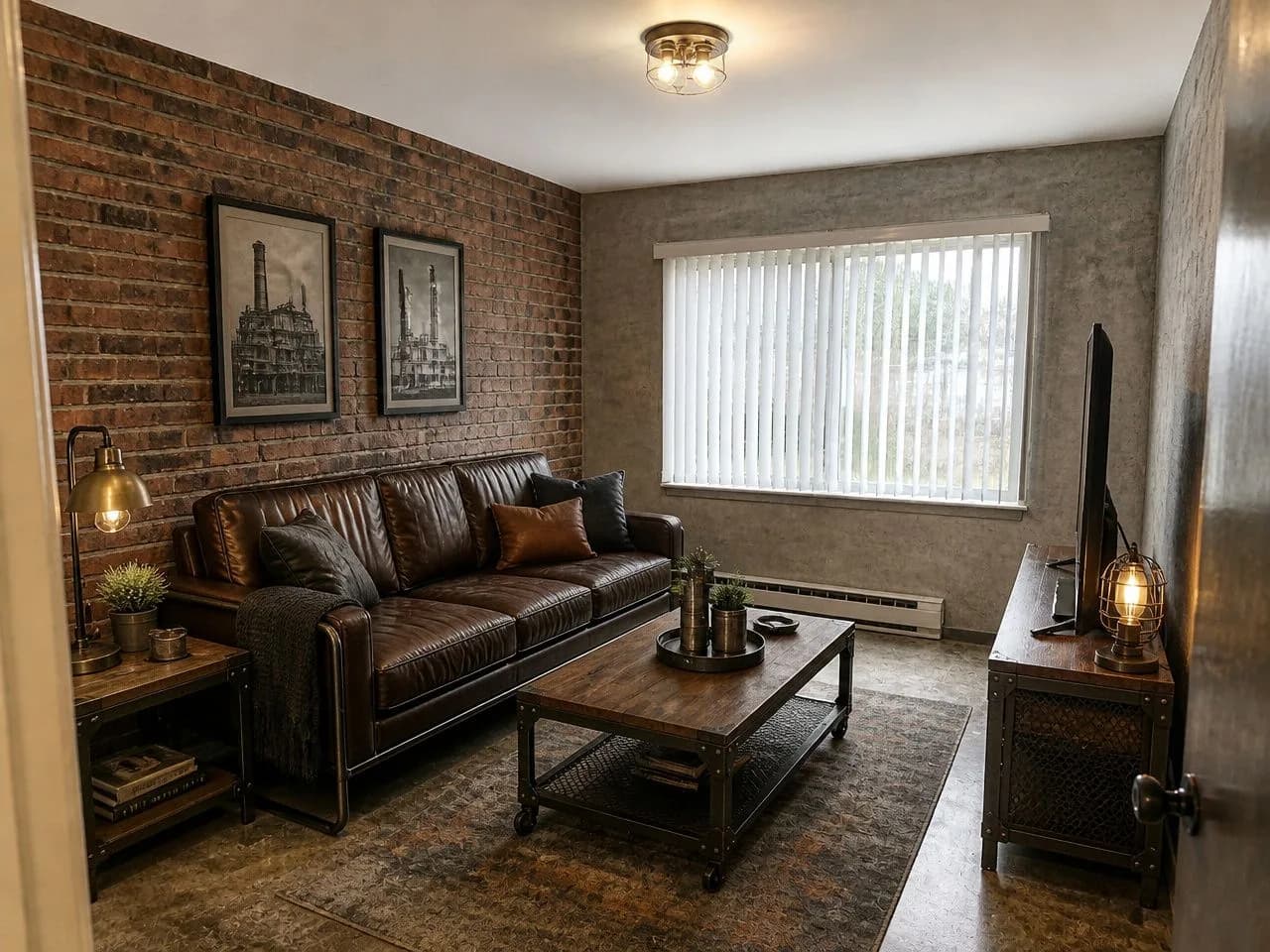
Raw materials, city attitude.
Brick, concrete, black steel and leather, softened with wood and warm bulbs. Works best with open space and a few strong pieces.
Industrial guide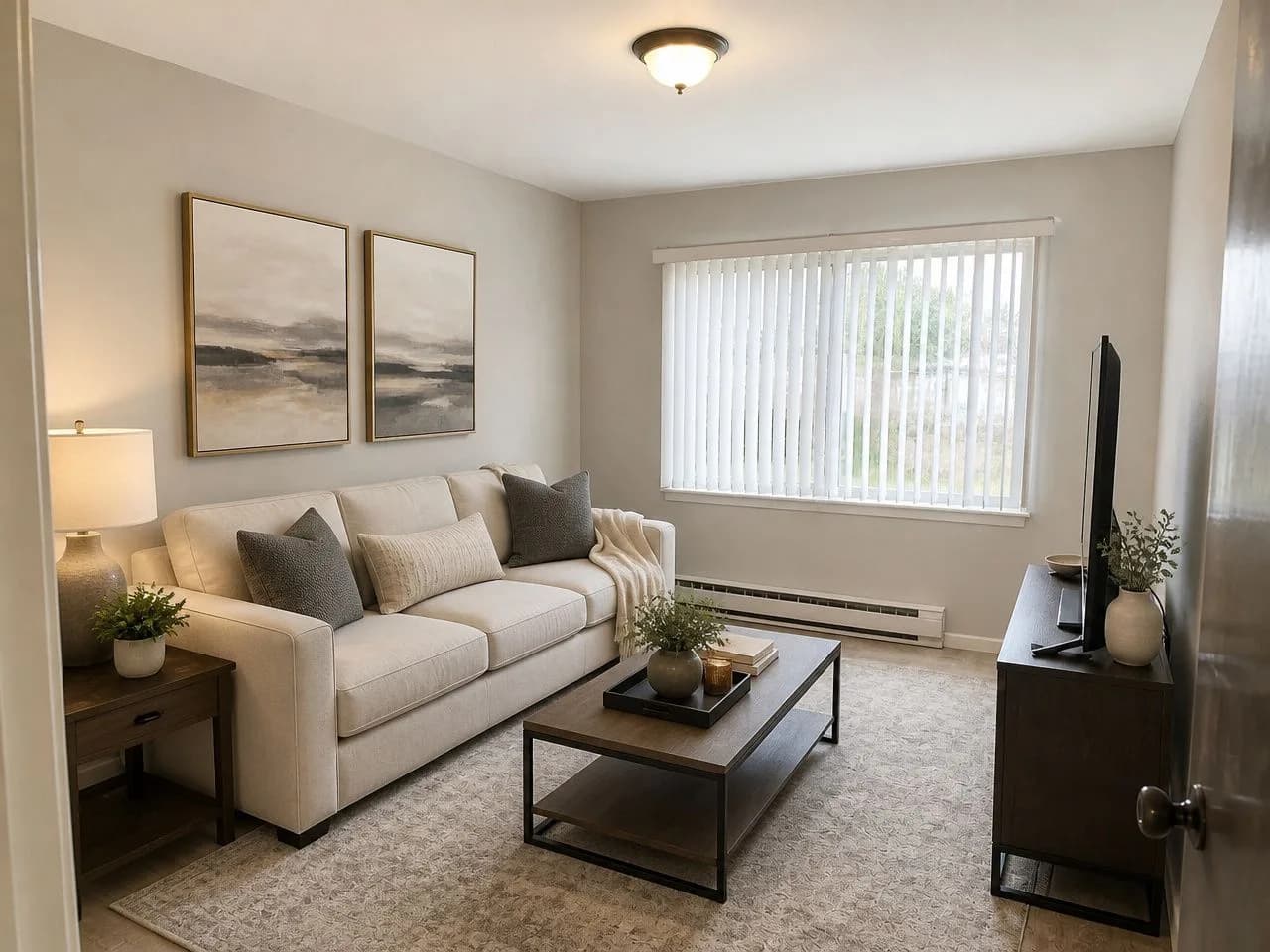
Classic comfort, modern lines.
The middle ground between traditional and contemporary: tailored furniture, soft neutrals and a few classic details. Timeless and easy to live with.
Transitional guide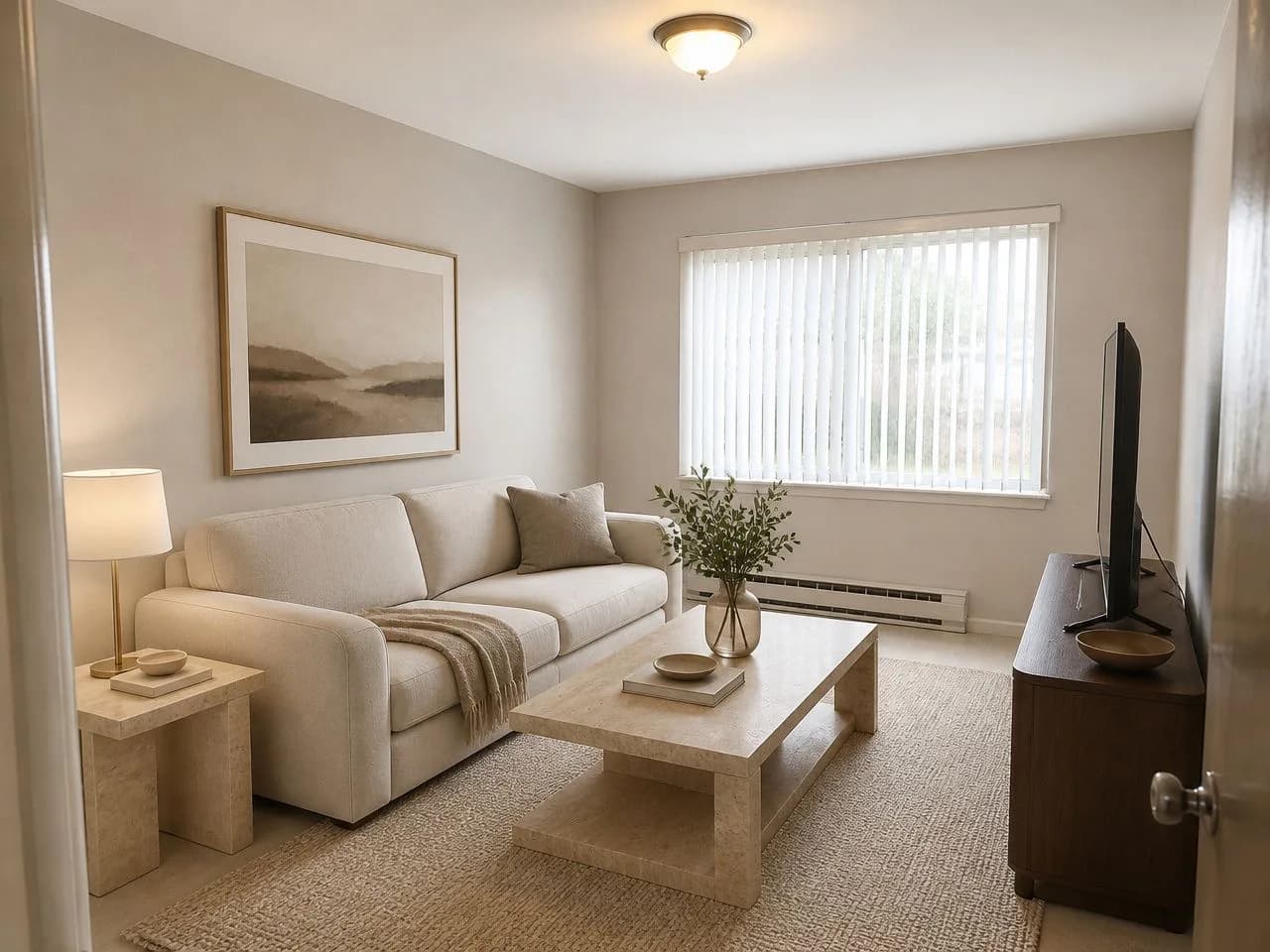
Looks expensive, never loud.
Beautiful materials in soft, tonal neutrals: bouclé, travertine, wool and plaster. No flash, just pieces that feel good to touch and live with.
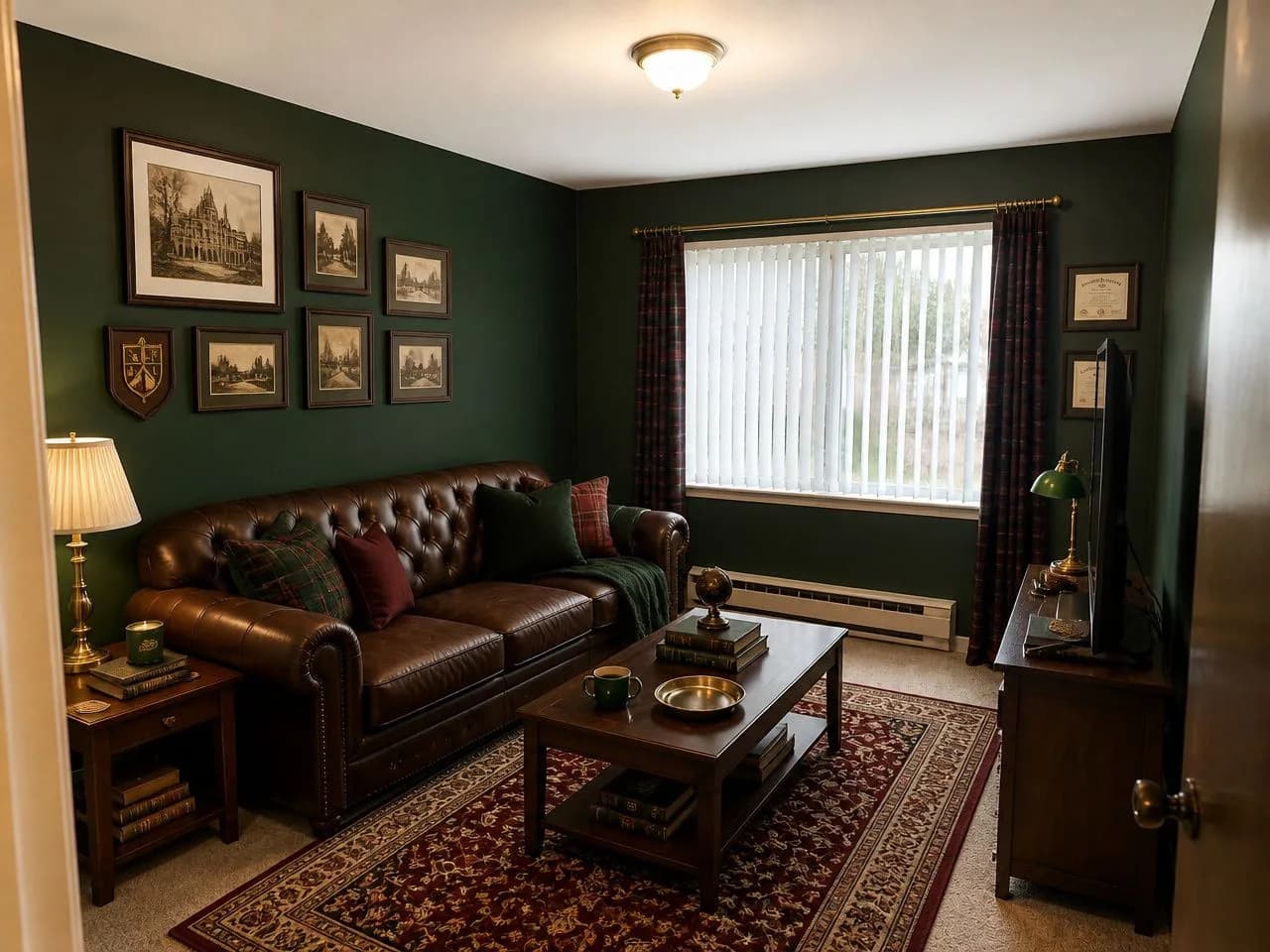
Books, deep colors and old-world warmth.
Rich greens, oxblood and walnut, shelves full of books and pools of lamp light. Moody, a little scholarly and very cosy.
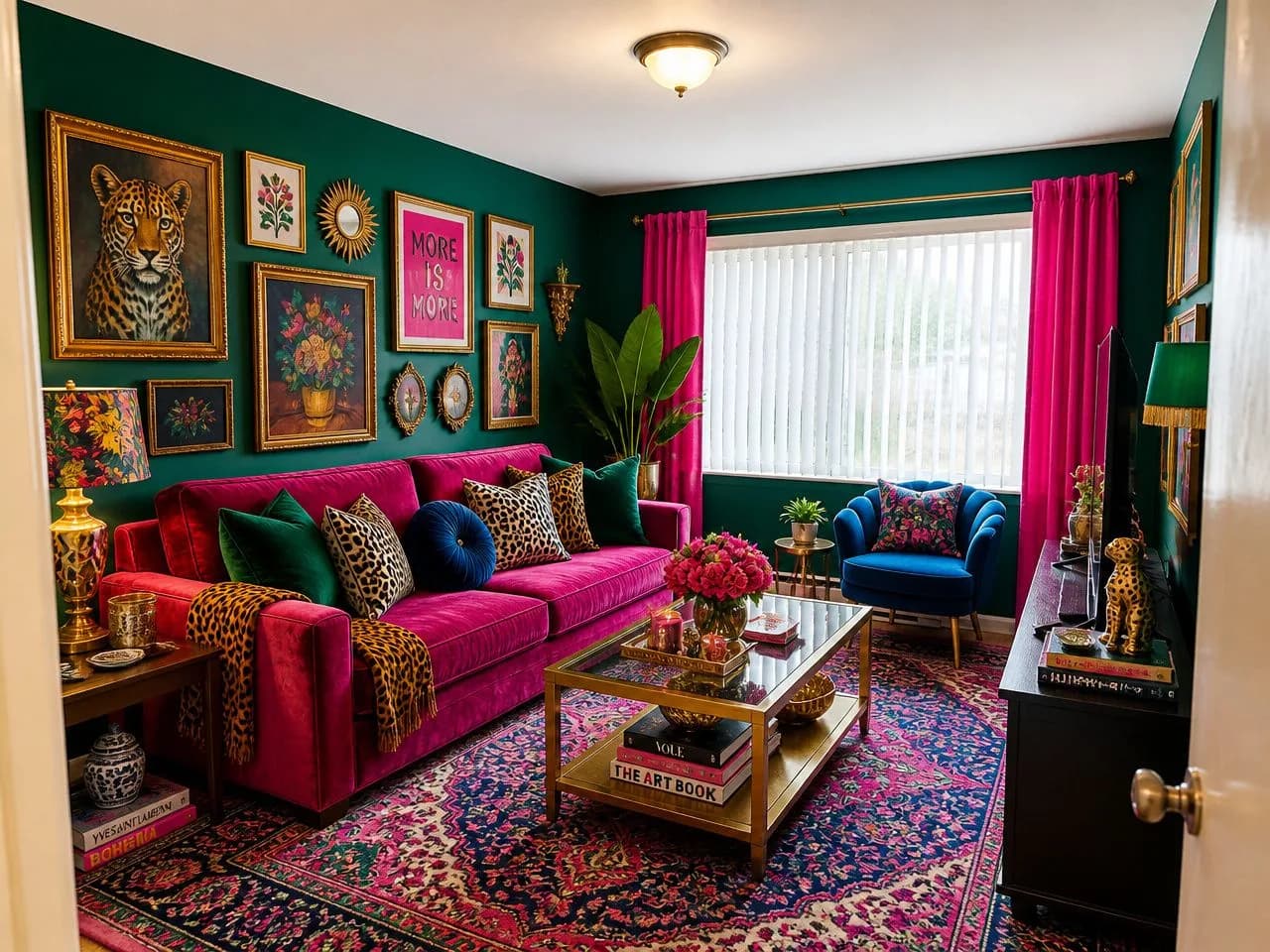
More is more, done on purpose.
Bold color, pattern on pattern and everything you love on display. What makes it work is a common thread: a palette or a mood that ties it together.
Maximalist guide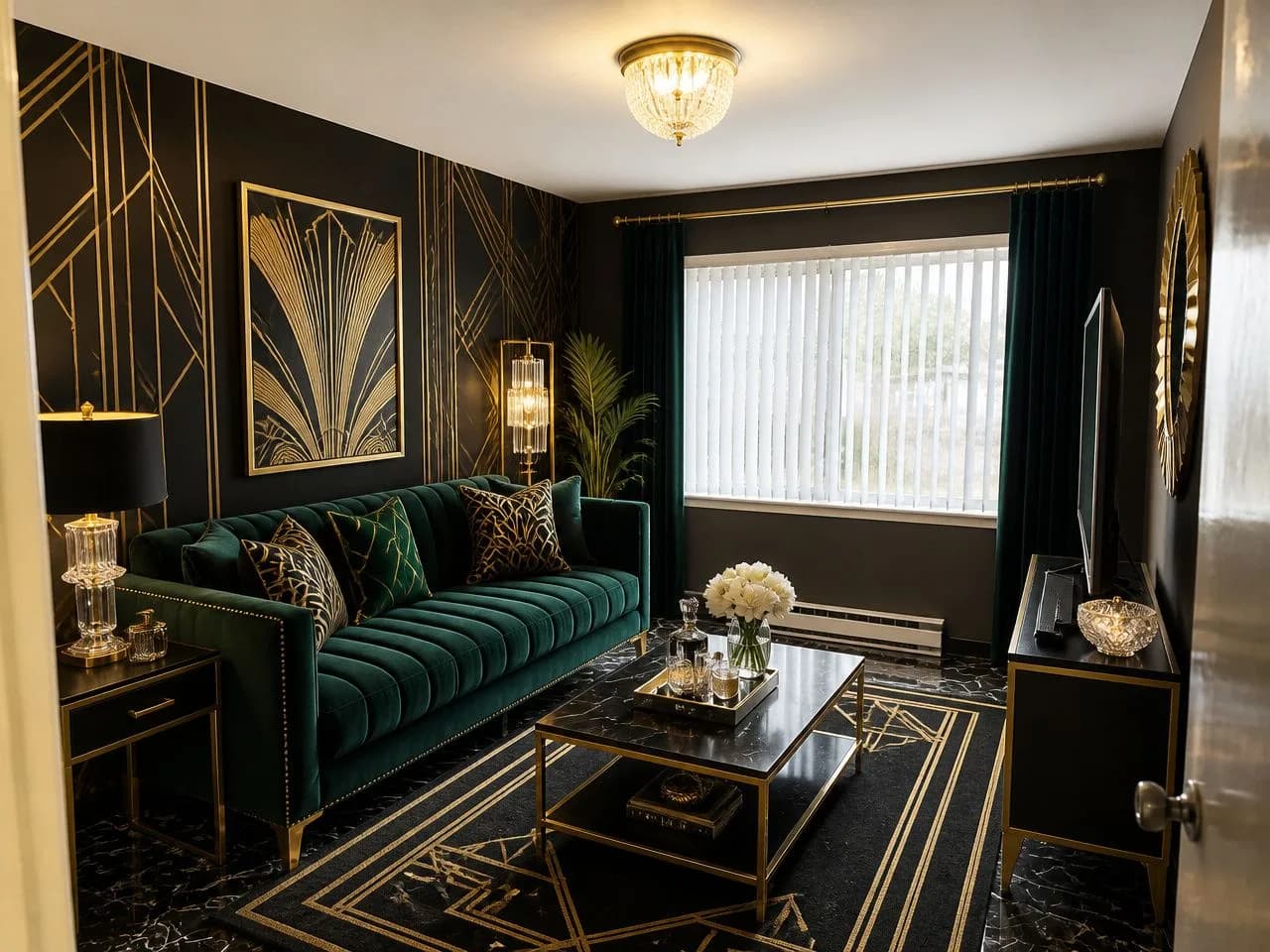
Glamour, geometry and gold.
Jewel tones, velvet, brass and bold geometric patterns from the 1920s. Dramatic, elegant and made for having people over.
Art Deco guide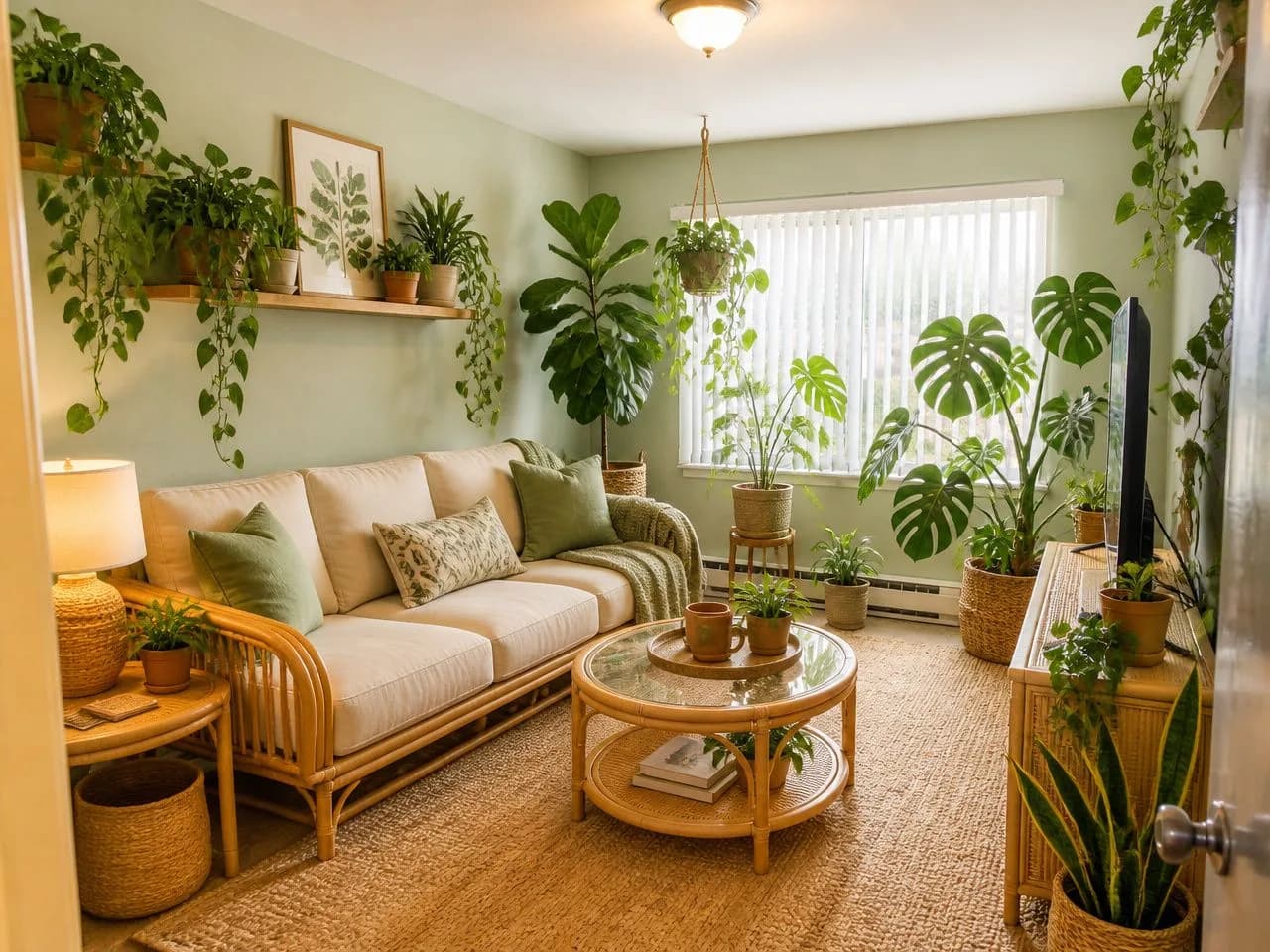
Bring the outside in. All of it.
Big leafy plants, trailing greenery, rattan and light wood in sage, cream and terracotta. Fresh, calm and alive.
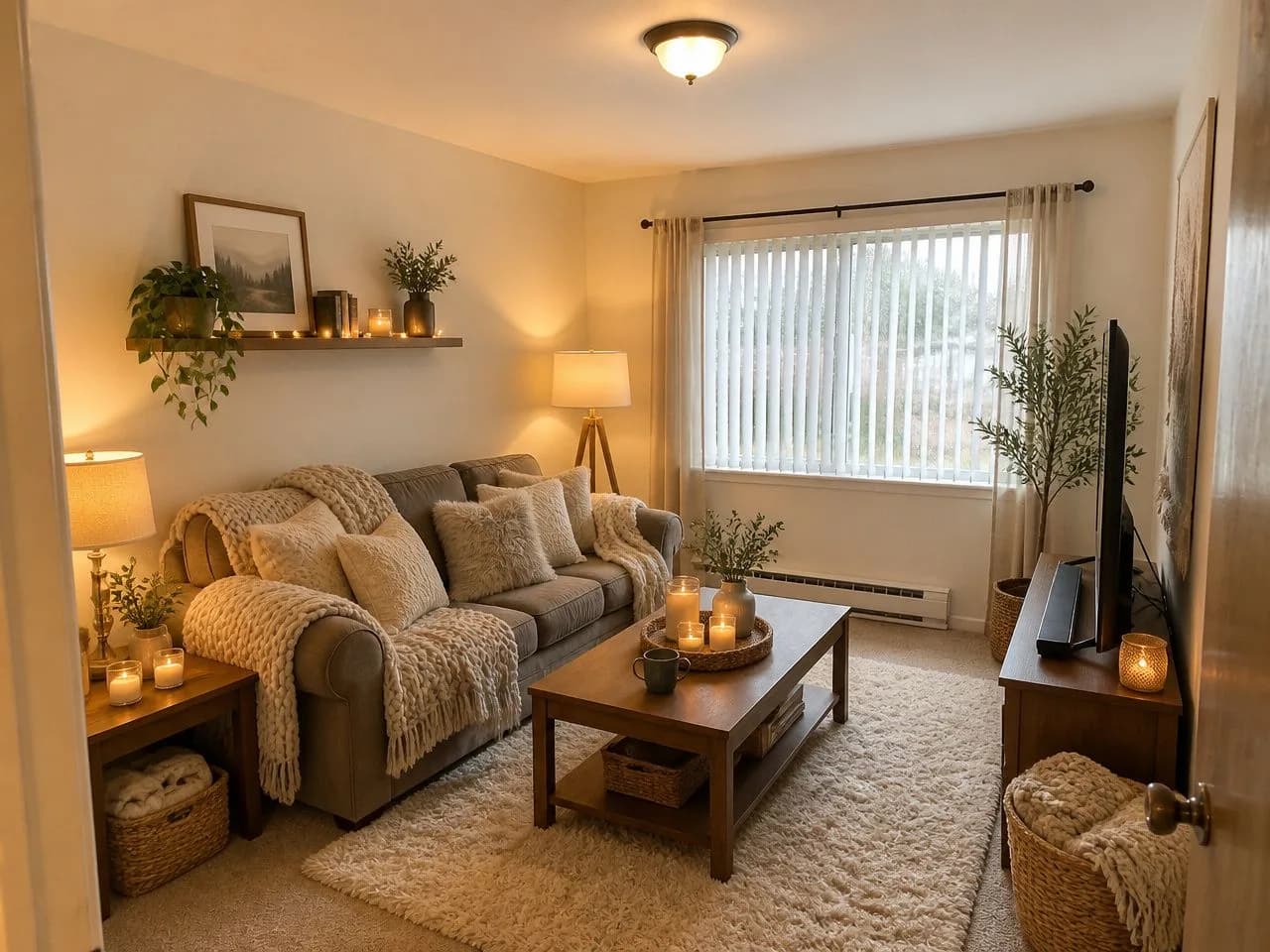
The coziest room you will ever sit in.
Chunky knits, soft low light, candles and a place to curl up. The Danish idea of comfort, built for slow evenings.
The app has 75+ styles in total. Browse all interior design styles
A light-hearted way to read your result: pick the sentence that sounds most like you. This is our own pairing of moods and styles, not a psychology test; the quiz above does the real scoring.
Your perfect Saturday is a slow morning and an empty calendar.
Japandi or Warm Minimalist. Calm, low, uncluttered rooms with natural materials.
You own too many blankets and light a candle at 4 p.m.
Hygge Haven. Soft light, chunky knits and a place to sink in.
You keep things from every trip: books, plants, a rug from a market.
Bohemian or Eclectic. Layered, collected and full of stories.
You like rooms that feel like a boutique hotel: confident and a little glossy.
Art Deco or Quiet Luxury. Symmetry, rich texture and one statement piece.
You would pick a library over a café any day.
Dark Academia. Deep colors, books and warm brass light.
Your favorite chair was designed in 1962 and you know the designer.
Mid-Century Modern. Walnut, clean curves and iconic shapes.
You open every window and want to hear the sea.
Coastal. Light, airy, sand and sea blue.
You like honest materials: brick, metal, wood that shows its age.
Industrial or Modern Farmhouse. Raw textures with a lived-in feel.
Two of these sound like you? Good: that is a mix. Take the interior design style quiz to see how much of each.
8 questions about rooms, colors, furniture, materials, light, plants and how you spend a Saturday. Here is exactly what happens with your answers.
Rooms, colors, a sofa, materials, light, plants and your perfect Saturday. Tap the answer that feels most like you.
Each answer adds points to the styles that share it. You get your top three, with how much of each is you. No email, no account.
Upload a photo and Decoratly redesigns your room in your style, usually in about a minute. Same walls, same windows, new everything else.
The quiz is a starting point, not a verdict: most homes mix two or three styles, which is why you get a mix and not a single label.
A result is only useful if it changes what you buy. Here is how to turn your top three styles into a room, in four steps.
Your result gives you three styles with percentages. Use the first as your main style and the second as your accent style. The third is a tiebreaker when you cannot decide.
A classic way to mix: about 60 percent of the room in your main style (walls, floor, the big furniture), 30 percent in your second (curtains, rugs, lamps) and 10 percent in accents (art, cushions, plants).
Each result shows five colors. Pick the three you like most and carry them through the room. Color is the fastest way to make a mix of styles feel like one home.
Light, ceiling height and the shape of the room change how a style looks. Upload a photo and see it on your real room before you paint or buy anything.
This is the photo every result above started from. Upload yours and Decoratly redesigns it, usually in about a minute, keeping the walls, windows and layout. Your first design is free in one of three styles; the rest come with the 30-day pass.
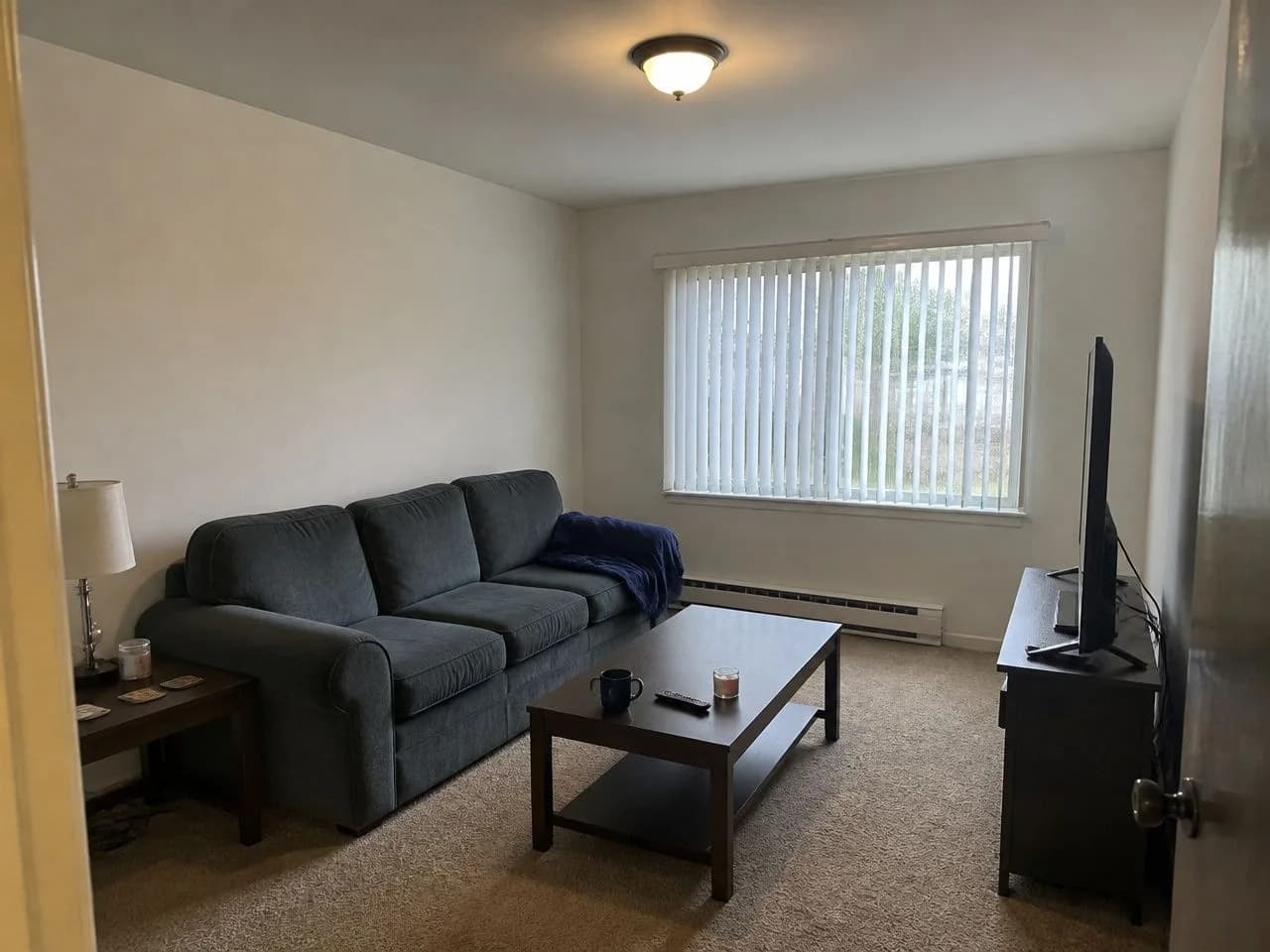 📷 Before✨ Japandi✨ Bohemian✨ Art Deco
The free design is available in the US, Canada, the UK and several European countries.
It is the look you keep coming back to: the rooms you save, the colors you never get tired of, the pieces you would choose without thinking. This quiz works it out from eight questions about rooms, palettes, furniture, materials, light and how you like to spend your time, and gives you your top three styles with a percentage for each, because most people are a mix.
Three quick ways. Take the quiz above for a result in about two minutes. Or look at the last ten rooms you saved or screenshotted and write down what they share: the colors, the materials, the shapes of the furniture. Or look around your own home and name the five things you would never get rid of. Where those answers overlap is your style; most people end up with a main style plus a second one for accents.
Yes. There is no email, no account and no sign-up: your result appears on the page as soon as you answer the last question. If you want to see your style on your own room afterwards, you can upload a photo to the Decoratly app; the first design is free in the US, Canada, the UK and several European countries.
A home aesthetic is the overall feel of a home: its colors, textures, shapes and mood, such as calm, cozy, bold or romantic. This quiz is a home aesthetic quiz in practice: your answers about mood, color and materials point to one of 16 interior design styles, so the result comes with a name, a palette and a list of what to look for when you shop.
Not in a scientific way. Taste and personality overlap (people who like quiet evenings tend to love calm rooms), but a style quiz is not a psychology test. What it can do well is turn gut reactions into a clear direction you can use: a name for your look, a palette and a shopping list. Our personality guide above pairs moods with styles for fun, and the quiz does the actual scoring.
Each answer adds points to the styles that share that trait. A curved bouclé sofa, for example, adds points to Quiet Luxury, Warm Minimalist and Art Deco. The three styles with the most points are your result, and the percentages show how your points split between them. All 16 possible results are real styles in the Decoratly app.
Treat it as a starting point, not a verdict. A short quiz can only see what you tell it, and almost every home mixes two or three styles. The quickest way to check a result is to see that style on your own room: if it feels right, it is right.
That is normal, and it is why you get a mix. A simple way to combine them is the 60-30-10 rule: about 60 percent of the room in your main style (walls, floor, big furniture), 30 percent in your second (curtains, rugs, lighting) and 10 percent as accents (art, cushions, plants).
There is no official number: designers disagree on where one style ends and the next begins, and styles keep blending. This quiz matches you to 16 well-known ones. The Decoratly app has 75+ styles in total, and you can also describe your own.
Yes. Answer for the room you are working on. The questions are about taste, so most people get a similar result for every room, but a bedroom often comes out calmer than a living room. If you want to check, retake the quiz with a different room in mind and compare.
No. The quiz runs in your browser and does not ask for an email address or an account. Your result lives only on the page; if you share it, the link carries your result and nothing else.
Both are calm, natural and uncluttered. Scandinavian is lighter and cosier: pale walls, light woods and soft textiles. Japandi is lower, more muted and more pared back, with earthy tones, darker woods, a little black and more empty space.
It sits between traditional and contemporary: classic comfort and a few traditional details, with cleaner lines and a soft neutral palette. It is one of the most common styles in American homes because it is easy to live with and does not date quickly.
Yes. After your result, upload a photo of your room and the Decoratly app redesigns it, usually in about a minute, keeping your walls, windows and layout. Your first design is free in one of three styles (Modern Studio, Scandinavian or Riviera Morning); the closest one to your result is shown above. Your exact style, and 70+ more, are part of the 30-day pass: $14.99 once, no subscription.
Kamil Uhryn, who builds and runs Decoratly. The questions and the scoring are ours, the 16 results are real styles in the app, and every picture on this page was made by the app from one ordinary photo. 25,000+ rooms have been redesigned with Decoratly since November 2023.
Last updated November 2026.