
Mid-Century Modern Interior Design - Upload a Photo, See It Free
Upload a photo of your room and see it transformed with mid-century modern style instantly. Walnut and teak tones, clean geometric lines, iconic silhouettes - see YOUR space in the style with AI. Try 1 design free, no signup required.

Mid-century modern living room
What Is Mid-Century Modern Interior Design?
Mid-century modern describes the interior style that grew out of the 1940s-1960s modernist movement: clean lines, organic curved shapes, and a focus on function. Furniture from this era - the era of Eames, Saarinen and Wegner - is still reproduced and collected today because the proportions and materials have aged well, unlike more trend-driven looks.
In a redesign, the style reads through warm wood tones (walnut and teak especially), tapered legs, sculptural silhouettes, and a confident but restrained use of color - one or two accent tones against a neutral base, not a rainbow of them.
Key Elements of Mid-Century Modern
- Warm wood tones: walnut, teak and oak, often left visible rather than painted.
- Tapered, raised legs: furniture that appears to float above the floor.
- Organic, sculptural shapes: curved backs, rounded arms, egg and shell forms.
- Confident accent color: mustard, burnt orange, olive or teal, used sparingly.
- Geometric pattern: starburst motifs, simple graphic textiles.
- Functional storage: credenzas and sideboards with clean, handle-minimal fronts.

How to Get the Look
- Start with the sofa or chair: a low-profile piece with tapered wood legs sets the tone for everything else.
- Choose one wood tone: pick walnut or teak (not both) and keep new furniture consistent with it.
- Pick one accent color: mustard, burnt orange or olive, used on a chair, a rug or artwork - not the whole room.
- Keep walls simple: white, warm gray or a deep neutral lets the furniture read as the focal point.
- Add one graphic element: a starburst clock, a geometric rug or abstract art.
- Edit the clutter: mid-century rooms read as curated, not sparse - a few well-chosen pieces beat many small ones.
Mistakes to Avoid
- Mixing too many accent colors at once - pick one or two and repeat them.
- Choosing furniture with straight, boxy legs instead of tapered ones - the leg shape is one of the clearest signals of the style.
- Overfilling the room - mid-century interiors rely on visible floor space between pieces.
- Treating it as identical to "retro" - avoid kitsch novelty items; the style is about proportion and craft, not costume.
See It on Real Rooms
Four rooms redesigned in mid-century modern style using Decoratly's own style prompt - the same one available in the app.
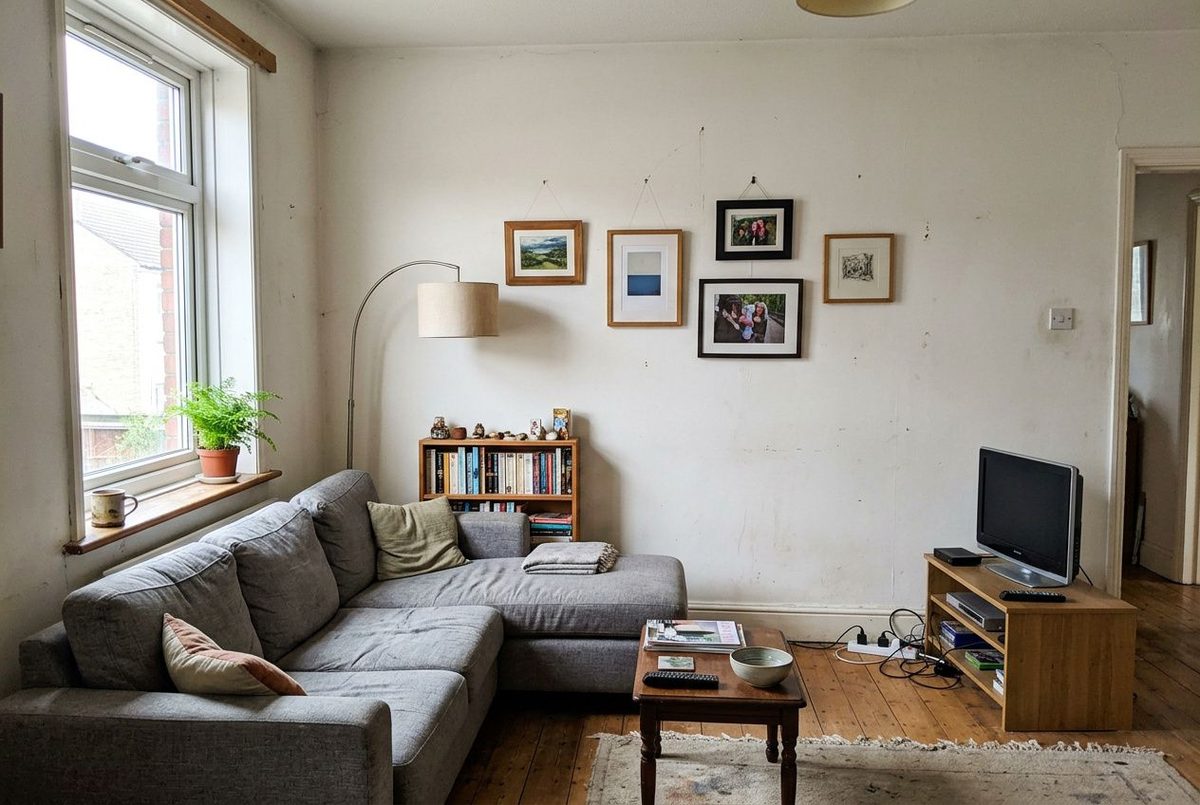
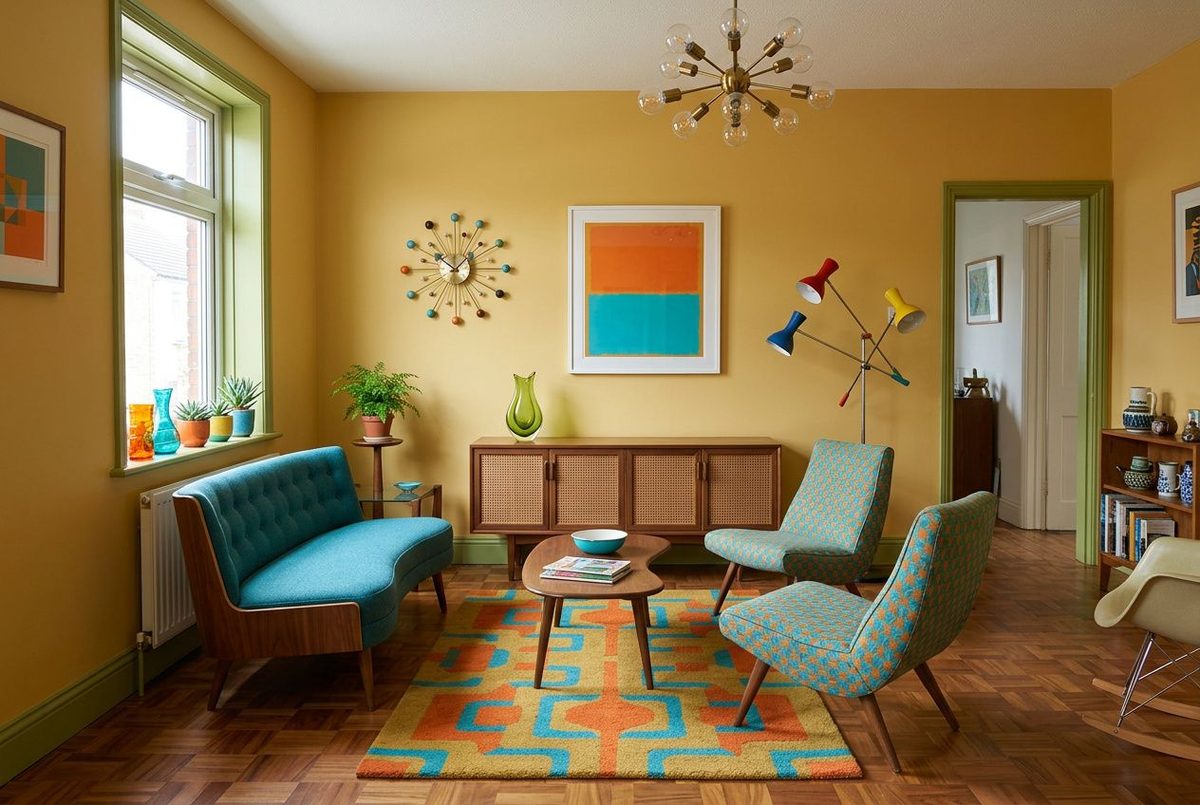
Living room: before / after
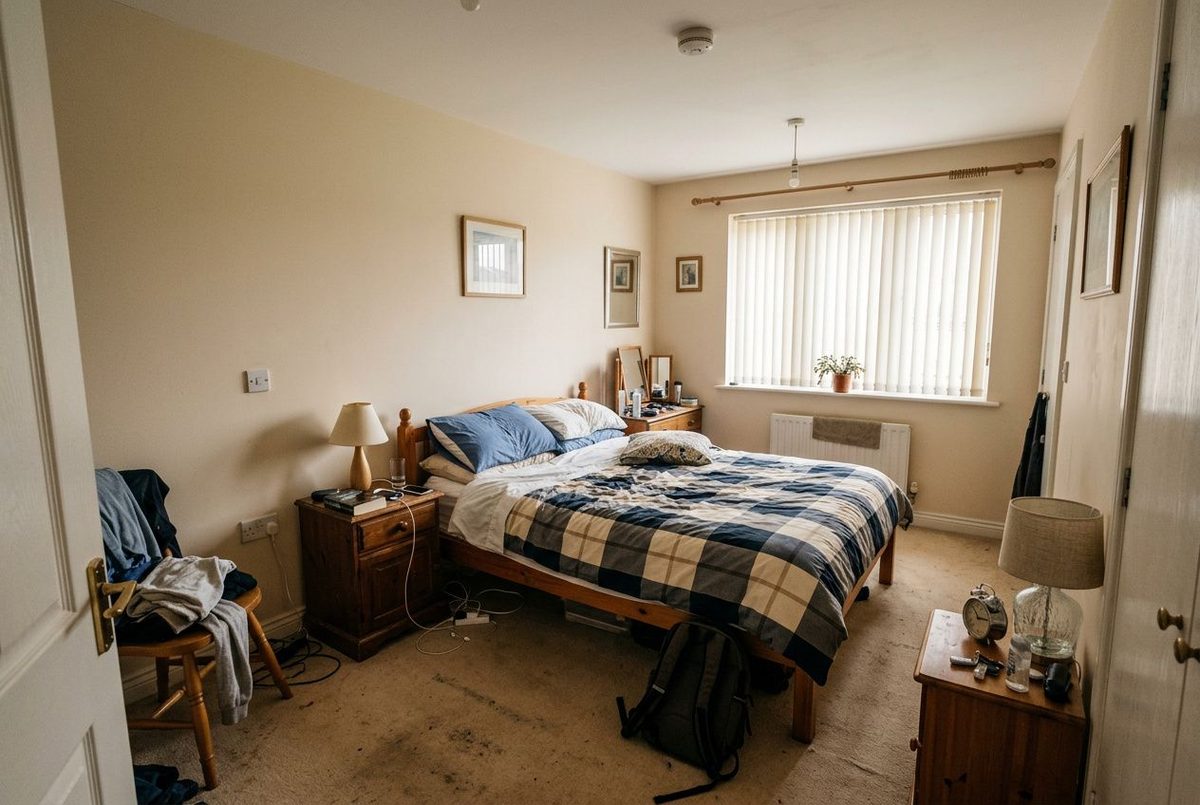
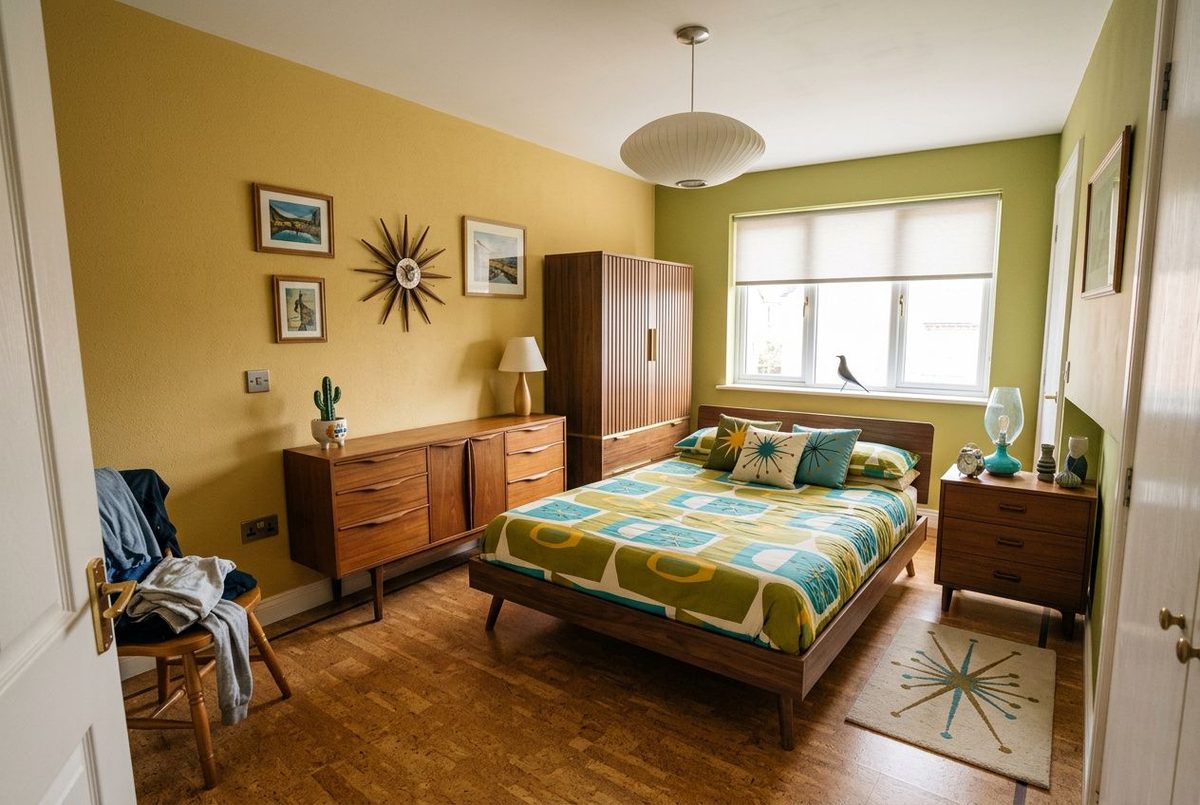
Bedroom: before / after
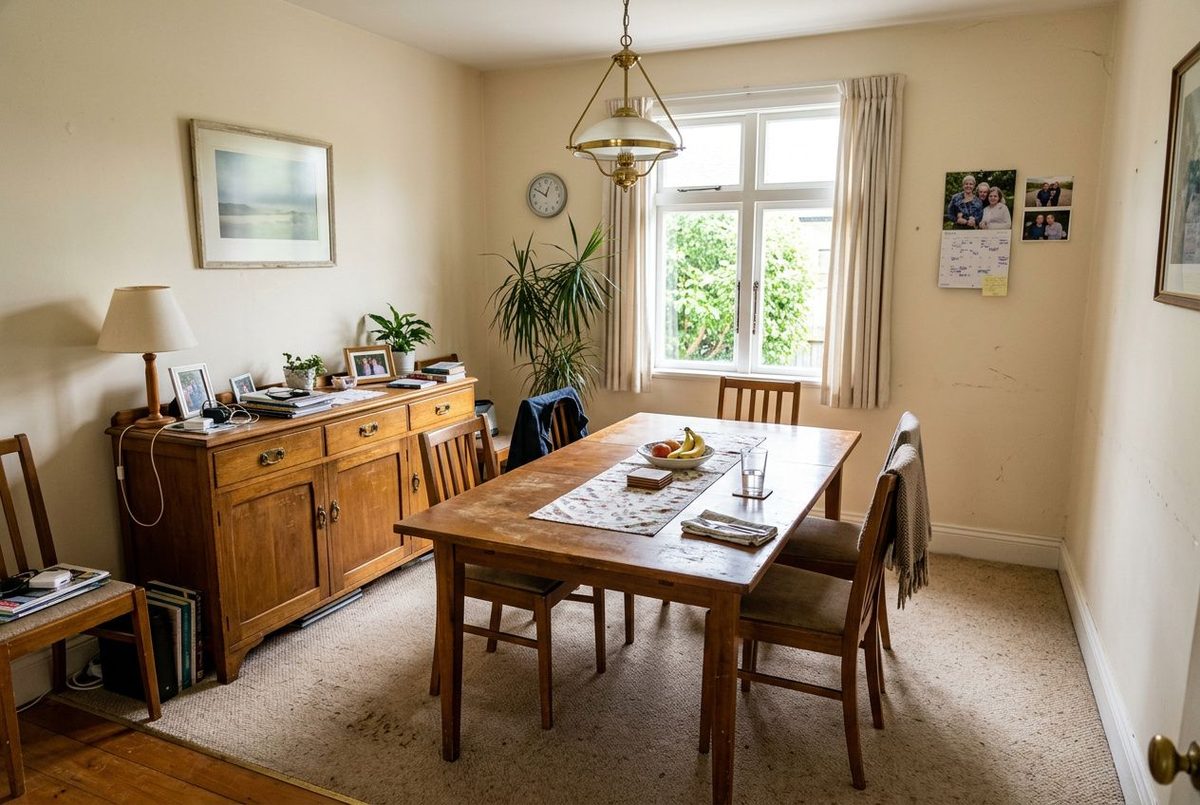
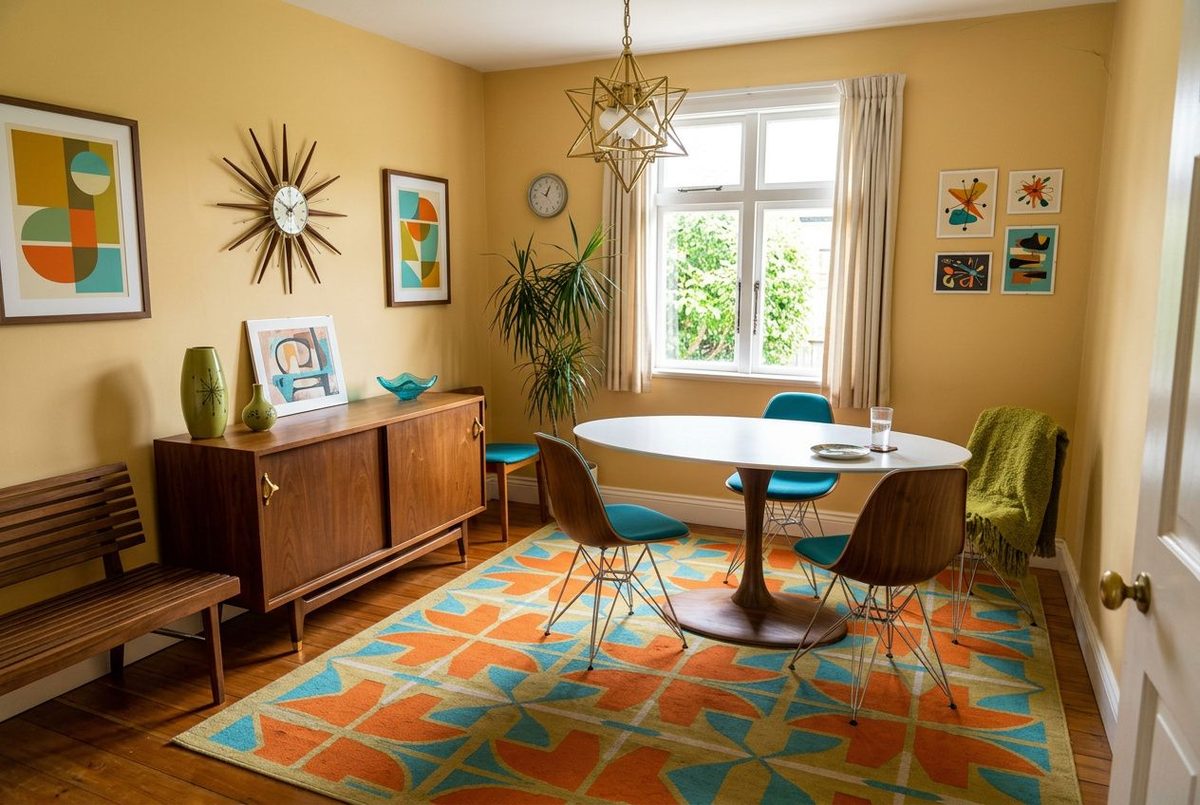
Dining room: before / after
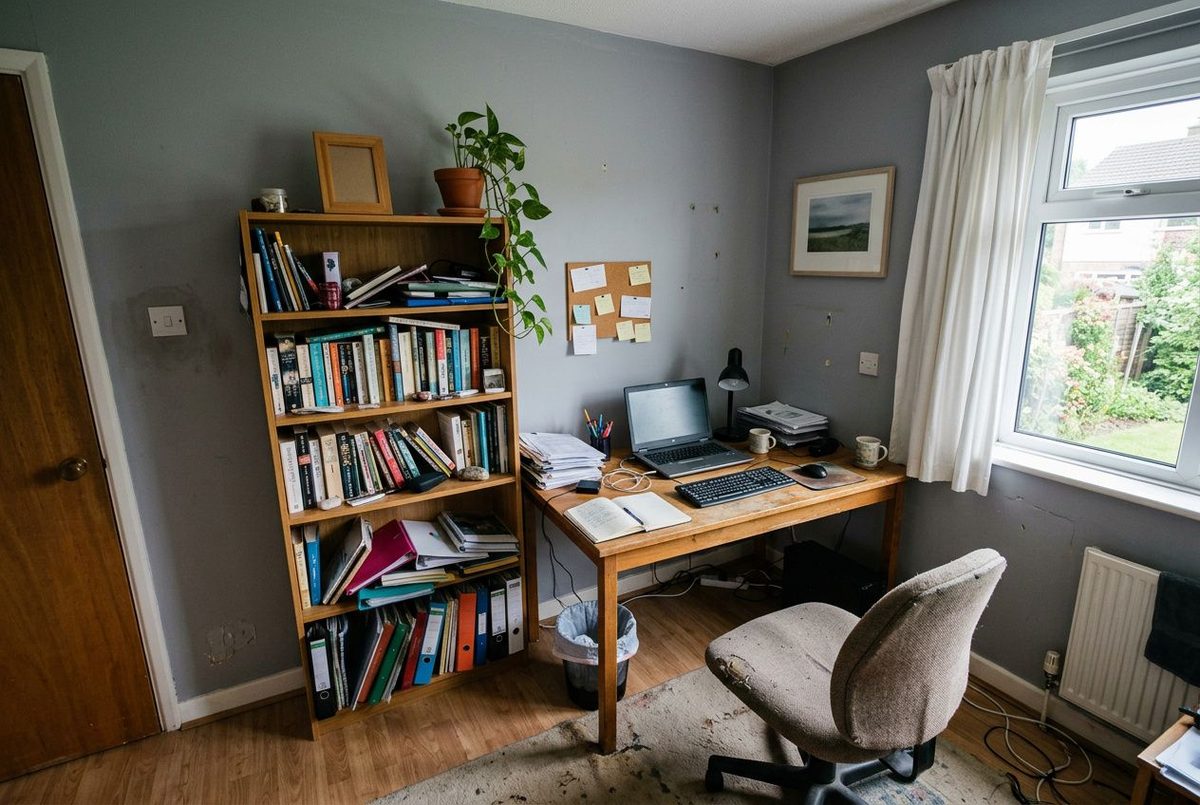
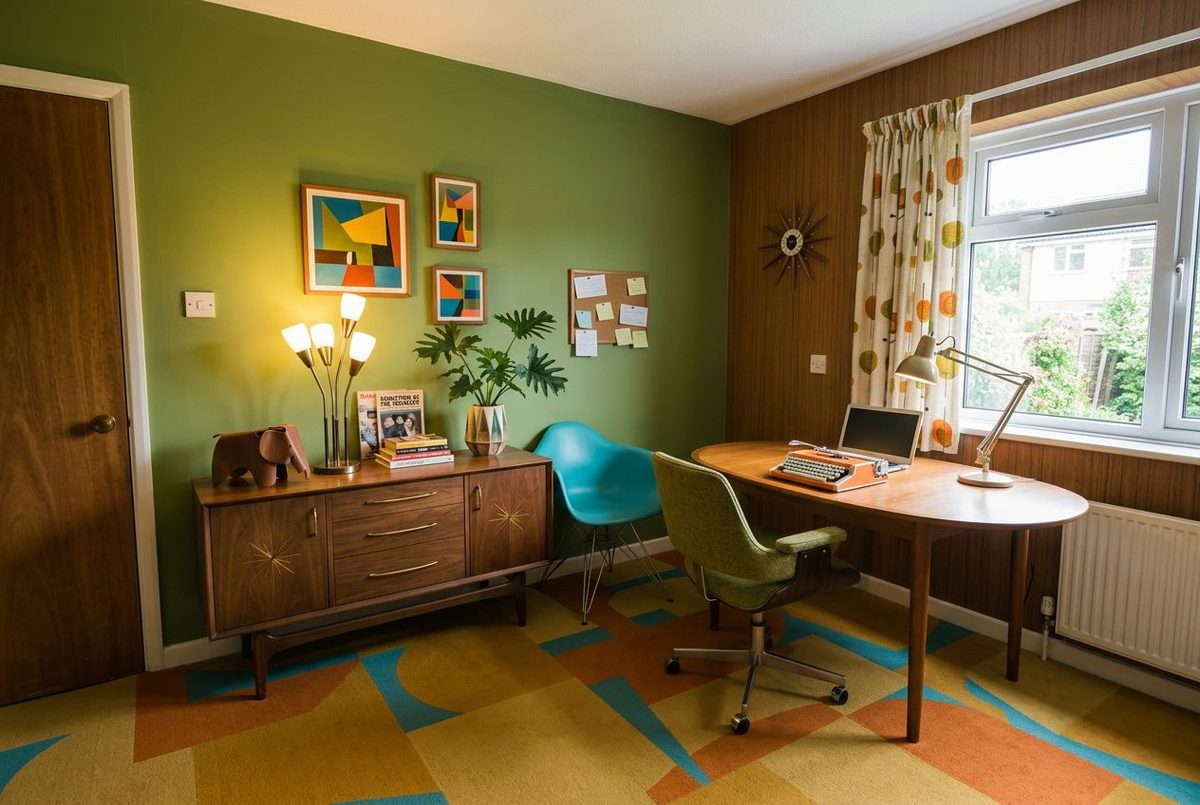
Home office: before / after
Example rooms are AI-generated. Each redesign was made with Decoratly, using the same mid-century modern style available in the app.
Mid-Century Modern: FAQ
What is mid-century modern interior design?
Mid-century modern is an interior style associated with the 1940s-1960s: clean geometric lines, organic curved silhouettes, and warm wood tones (especially walnut and teak), often paired with bold accent colors. It values furniture as much for its form as its function, and it favors real materials - wood, leather, brass - over heavy ornamentation.
What colors work in a mid-century modern room?
Warm woods (walnut, teak, oak) as the base, with white, black or warm gray for walls, and one or two confident accent colors - classic choices are mustard yellow, burnt orange, olive green or teal. The palette works best when the accent colors stay to a couple of pieces rather than covering every surface.
What furniture defines mid-century modern?
Tapered wooden legs, low-profile sofas and chairs, sculptural silhouettes, and pieces where the joinery and material are visible rather than hidden. Storage tends toward credenzas and sideboards with clean fronts rather than ornate cabinetry.
Can I see my own room in mid-century modern style before I buy anything?
Yes. Upload a photo of your room to Decoratly and see it redesigned in mid-century modern style in about 30 seconds. You get 1 free AI redesign, no signup and no credit card, so you can judge the look on your actual room before spending on furniture.
Does mid-century modern work in a small room?
It tends to work well in smaller rooms because the furniture silhouettes are low and legs are visible (raised off the floor), which reads as more open than boxy upholstered pieces. Keep the palette restrained and avoid crowding the floor with too many statement pieces.
See Your Room in Mid-Century Modern Style
Upload a photo and see it redesigned with warm wood tones and clean lines in about 30 seconds - free to try, no signup.
✓ 1 free transformation • ✓ No signup required • ✓ Results in 30 seconds
Written and maintained by Kamil Uhryn, founder of Decoratly. Last updated September 2026.