
Paint Calculator: How Much Paint Do You Need?
Enter your room's dimensions and we'll tell you exactly how many gallons to buy - plus what it'll cost in budget, quality and premium paint.
Room measurements
All measurements in feet
Doors, windows & coats
We'll subtract these from the wall area automatically
How much paint do you need for a room?
A rule of thumb: one gallon of paint covers roughly 350 square feet with one coat, so most rooms need two coats. A 12 x 12 ft room with 8 ft ceilings needs about 2 gallons of wall paint. The table below assumes 8 ft ceilings, one door and one window taken off the wall area, and two coats. Use the calculator above for your exact numbers.
| Room size | Paintable wall area | Gallons (2 coats) | Buy |
|---|---|---|---|
| 10 x 10 ft | 284 sq ft | 1.6 | 2 gallons |
| 10 x 12 ft | 316 sq ft | 1.8 | 2 gallons |
| 12 x 12 ft | 348 sq ft | 2.0 | 2 gallons |
| 12 x 14 ft | 380 sq ft | 2.2 | 3 gallons |
| 12 x 16 ft | 412 sq ft | 2.4 | 3 gallons |
| 14 x 16 ft | 444 sq ft | 2.5 | 3 gallons |
| 16 x 20 ft | 540 sq ft | 3.1 | 4 gallons |
| 20 x 20 ft | 604 sq ft | 3.5 | 4 gallons |
Coverage varies by brand and surface (textured or dark-to-light changes need more), so check the can. Ceilings, trim and primer are extra. Wall area = 2 x (length + width) x 8 ft, minus 36 sq ft for a door and a window.
Why this calculator uses 350 sq ft per gallon, not 400
Paint cans are optimistic. Here's the real math behind the estimate.
What the can says: 400 sq ft
That number comes from lab conditions - perfectly smooth drywall, professional spray equipment, and zero waste. It's technically true, but it's not how painting happens in a real house.
What actually happens: 300-350 sq ft
Rollers leave more paint on the wall than sprayers. Normal texture, trim cutting-in, and a second coat that's never quite as thin as the first all add up. 350 sq ft per gallon is the number that matches what people actually use.
What changes your real coverage
Wall texture
Textured or rough walls can use 20-30% more paint than smooth drywall.
Paint color
Dark or bold colors often need an extra coat for even coverage.
Application method
Spraying uses more paint than rolling; rolling uses more than brushing.
Surface porosity
Bare drywall, wood or plaster soak up extra paint on the first coat.
Rule of thumb: if your walls are textured, very porous, or you're painting a bold color, add about 20% to what the calculator recommends.
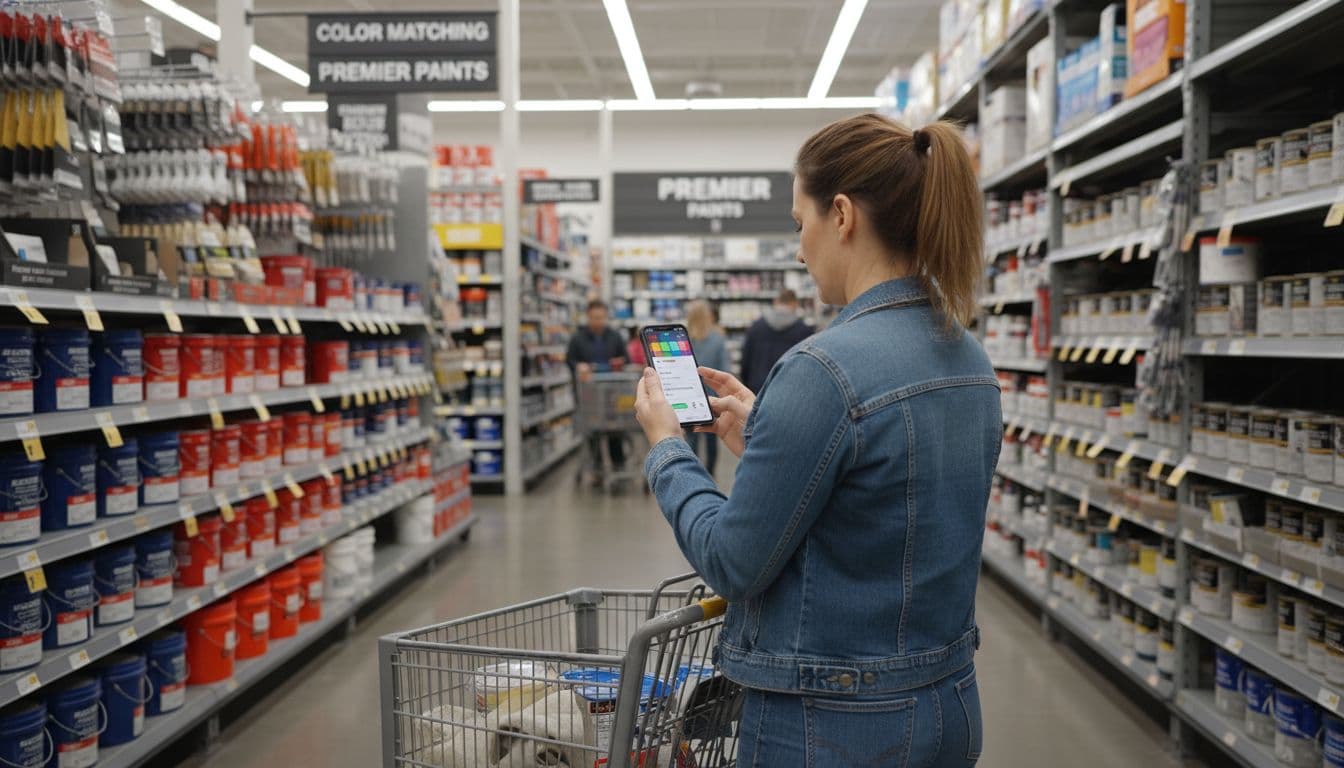
Four steps to your exact paint quantity
No formulas to remember - just measure, count, and click.
📏 Measure your room
Grab a tape measure and get length, width and ceiling height in feet. Skip the baseboards and crown molding - just wall-to-wall.
🚪 Count doors & windows
Walk the room and count doors and windows. Each door removes about 21 sq ft, each window about 15 sq ft - handled automatically.
🎨 Pick your number of coats
Two coats covers most jobs. Going from a dark color to a much lighter one? Choose three.
✨ Get instant results
See gallons needed, total paintable area, and cost estimates across budget, quality and premium paint - all in one view.
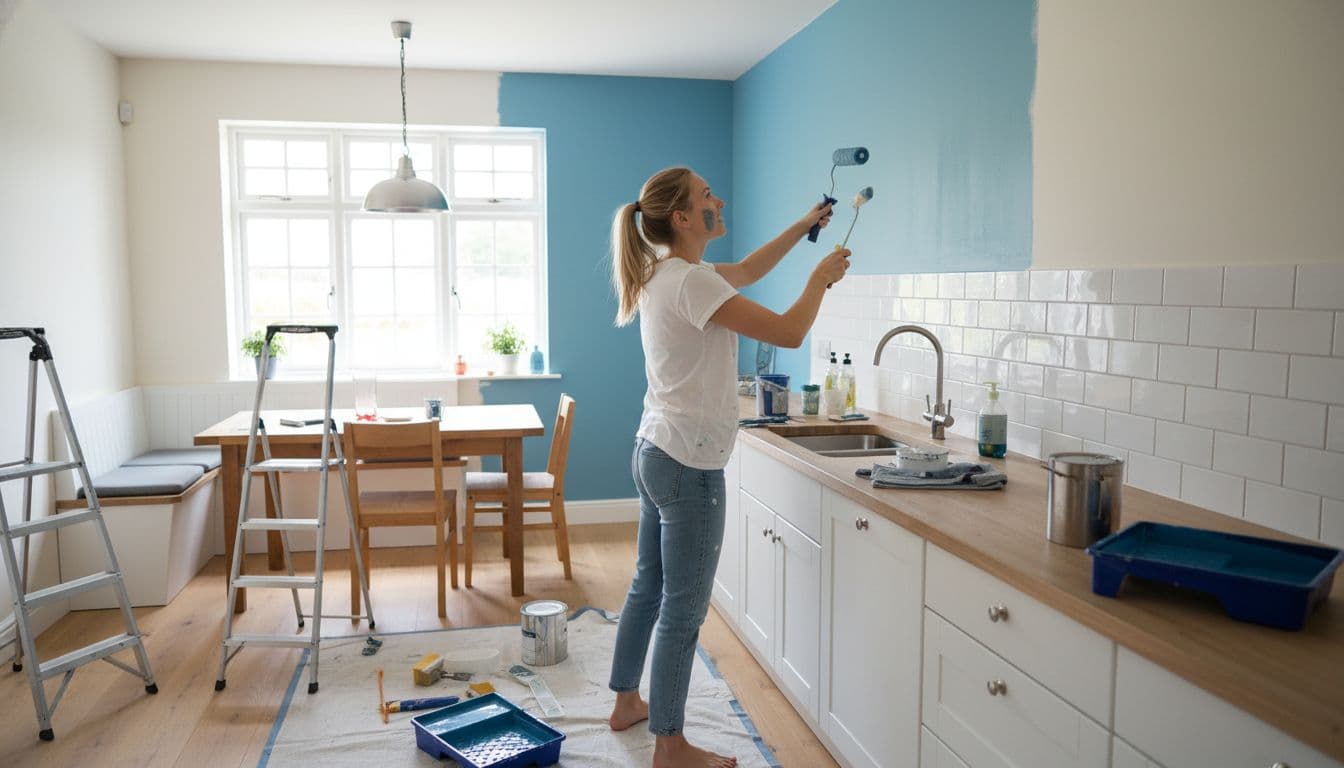
Paint calculator tips by room
The math stays the same - but each room has its own quirks worth knowing.
🛋️ Living room
Large windows and multiple doors mean more area gets subtracted than you'd expect - measure carefully, since a big picture window can save half a gallon.
🛏️ Bedroom
Usually the simplest room to estimate - fewer windows and doors. Consider an accent wall if you want personality without painting the whole room.
🍳 Kitchen
Cabinets, appliances and backsplash tile reduce the paintable area - you'll often need less than the raw calculation suggests.
🚿 Bathroom
Small room, but humidity matters more than square footage here. The area calculation is accurate - the paint type is what changes.
Common paint-buying mistakes
The calculator handles the math - these are the things people forget anyway.
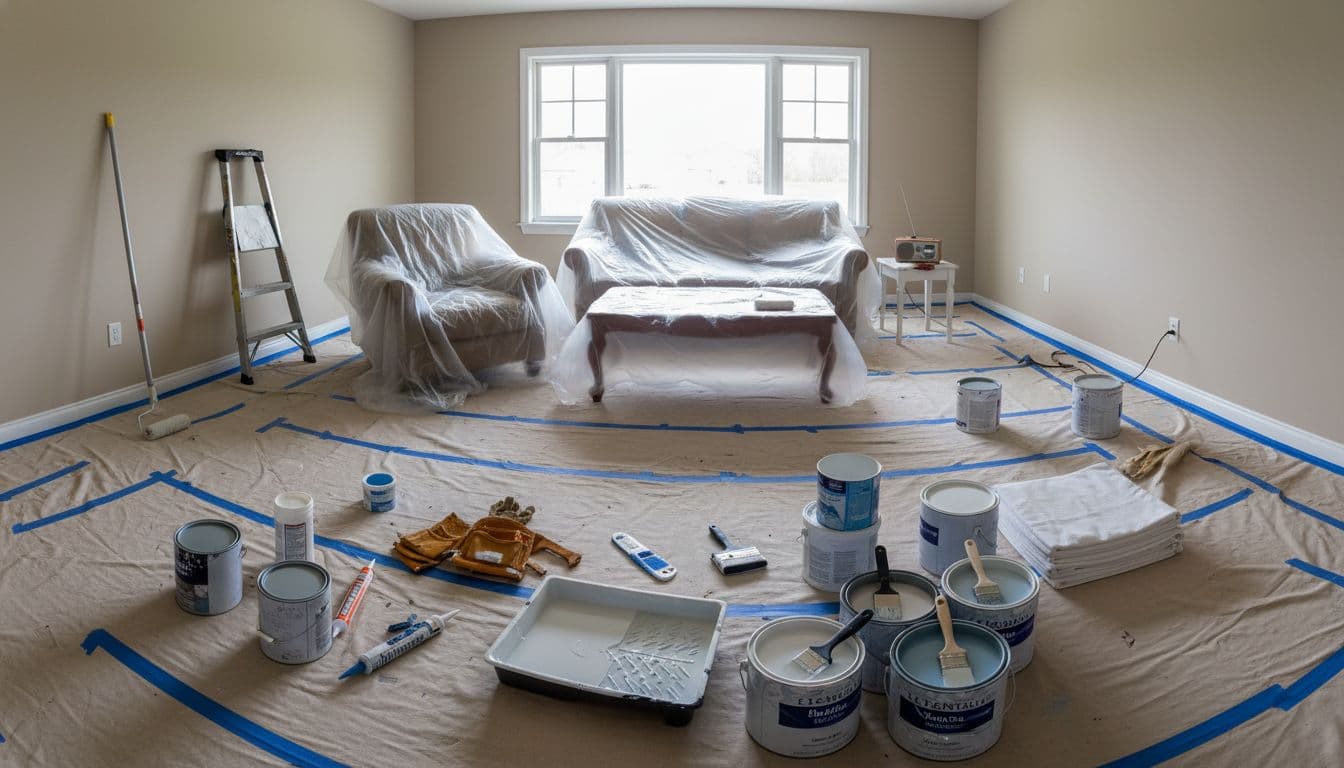
Skipping the ceiling
This calculator covers walls only. For the ceiling, divide length × width by 350 - most rooms need 1-2 gallons.
Trusting the can's coverage number
400 sq ft per gallon is a best-case figure. Plan around 300-350 sq ft for real-world results.
Forgetting primer
New drywall, dark-to-light changes, or stains all need primer first - it's a separate product, not 'paint and primer in one'.
Skipping the sample test
A color on a chip looks different under your lighting. Test a swatch on the actual wall before committing to gallons.
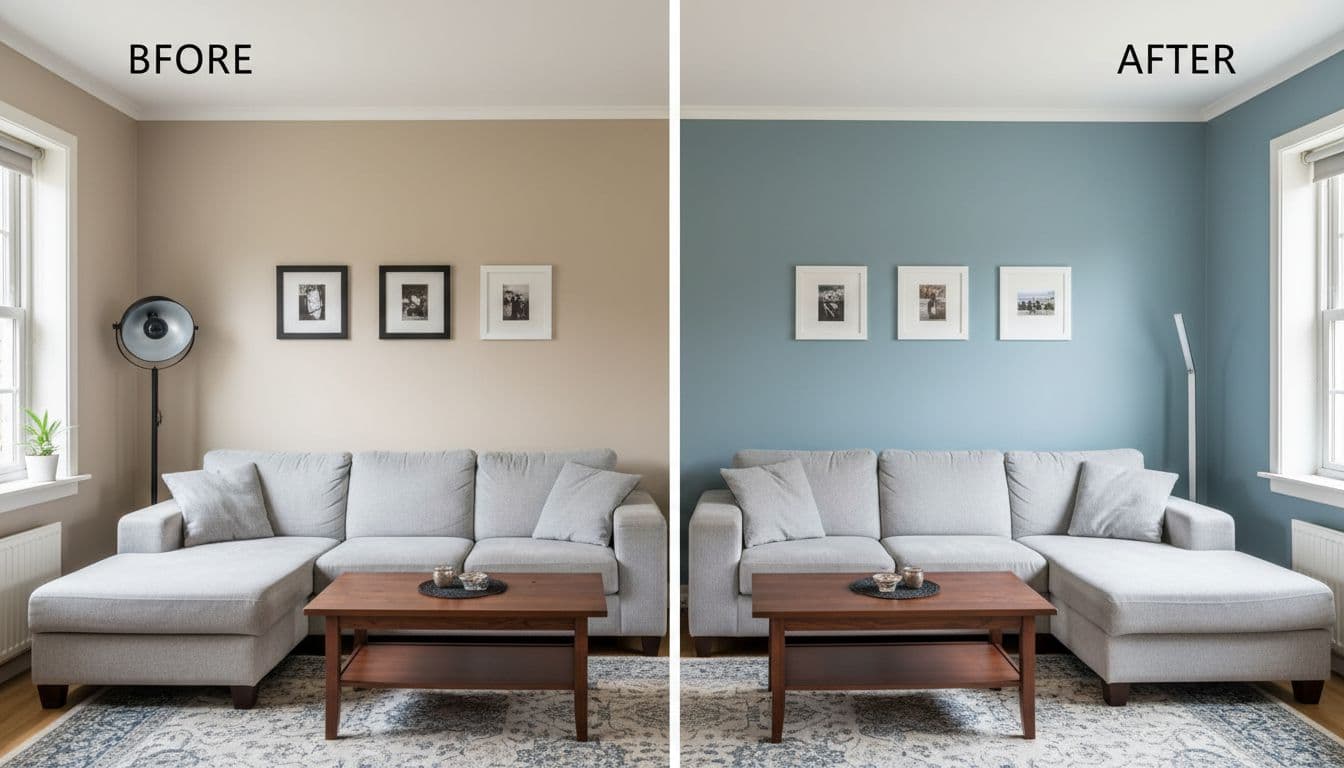
See the color on your actual walls first
You know how many gallons to buy. But will that "warm greige" actually look warm and greige in your room's light? Upload a photo of your space and preview any paint color on your real walls in about 30 seconds - before you commit to a single can.
Paint calculator questions, answered
How much paint do I need for a room?+
It depends on the wall area and how many coats you're applying. As a rough guide, a typical 12×12 ft bedroom with 8 ft ceilings needs about 2 gallons for two coats. Enter your exact dimensions, doors and windows above for a precise number.
How accurate is this paint calculator?+
It's accurate for typical rooms with standard ceiling heights and normal wall texture. It uses a realistic coverage rate of 350 sq ft per gallon - not the optimistic 400 sq ft that paint cans often claim - and automatically subtracts area for doors and windows. If your walls are textured or very porous, add about 20% more paint.
Why does this calculator use 350 sq ft per gallon instead of 400?+
Paint cans advertise 400 sq ft per gallon under ideal lab conditions - perfectly smooth walls, professional spray application, zero waste. In a real home with rollers, texture and normal wall imperfections, 300-350 sq ft per gallon is what people actually get. Using 350 gives you a number you can trust instead of one that leaves you a gallon short on a Saturday.
Does this include primer or the ceiling?+
No - this estimates wall paint only. For primer, use the same 350 sq ft per gallon rate; most primer jobs need just one coat. For the ceiling, calculate it separately as length × width ÷ 350 - most standard rooms need 1-2 gallons for the ceiling.
Should I round up the results?+
Yes. This calculator already rounds up to the nearest whole gallon, but it's worth buying one extra beyond that for touch-ups later - custom-mixed colors can't always be matched exactly months down the line. Most hardware stores accept returns on unopened cans, so extra paint isn't really a risk.
Can I use this for exterior painting?+
This calculator is built for interior walls. Exterior surfaces are usually rougher and more porous, so coverage drops - add roughly 25% more paint than this tool recommends, or use a dedicated exterior paint calculator.
How many gallons do I need for a 12×12 room?+
A 12×12 ft room with 8 ft ceilings has about 384 sq ft of wall area before doors and windows. Subtract one standard door and two windows (about 51 sq ft) and you're left with roughly 333 sq ft to paint. At 350 sq ft per gallon, that's about 1 gallon per coat - so 2 gallons for two coats.
What's the difference between flat, eggshell and satin paint?+
This calculator gives you quantity, not finish - but finish affects how the room feels. Flat or matte hides wall imperfections well but is harder to wipe clean, so it suits bedrooms and ceilings. Eggshell has a soft sheen with light washability, good for living rooms and hallways. Satin or semi-gloss is the most durable and easiest to clean, the standard choice for kitchens, bathrooms and trim.
Ready to paint? See it before you commit.
You know how much paint to buy. Now upload a photo of your room and try any color - or a full style makeover - before you open a single can.
Works with any paint brand · Results in 30 seconds · No signup
More Free Home Improvement Tools
Built by Kamil Uhryn, founder of Decoratly. Last updated September 2026.