
What modern interior design actually means
People use the word modern loosely, but in design it has a specific meaning. Modern design grew out of the modernist movement of the early to mid 20th century (think the Bauhaus school in Germany and the mid-century designers who followed) and its core idea was that form should follow function. Furniture and rooms were stripped of heavy ornament and built around clean shapes, honest materials and practical use.
That is why classic modern rooms look the way they do: straight lines, simple silhouettes, open space, and a few carefully chosen materials rather than lots of decoration. When someone today asks for a modern living room, they usually mean this look, sometimes softened with warmer colors and textures.
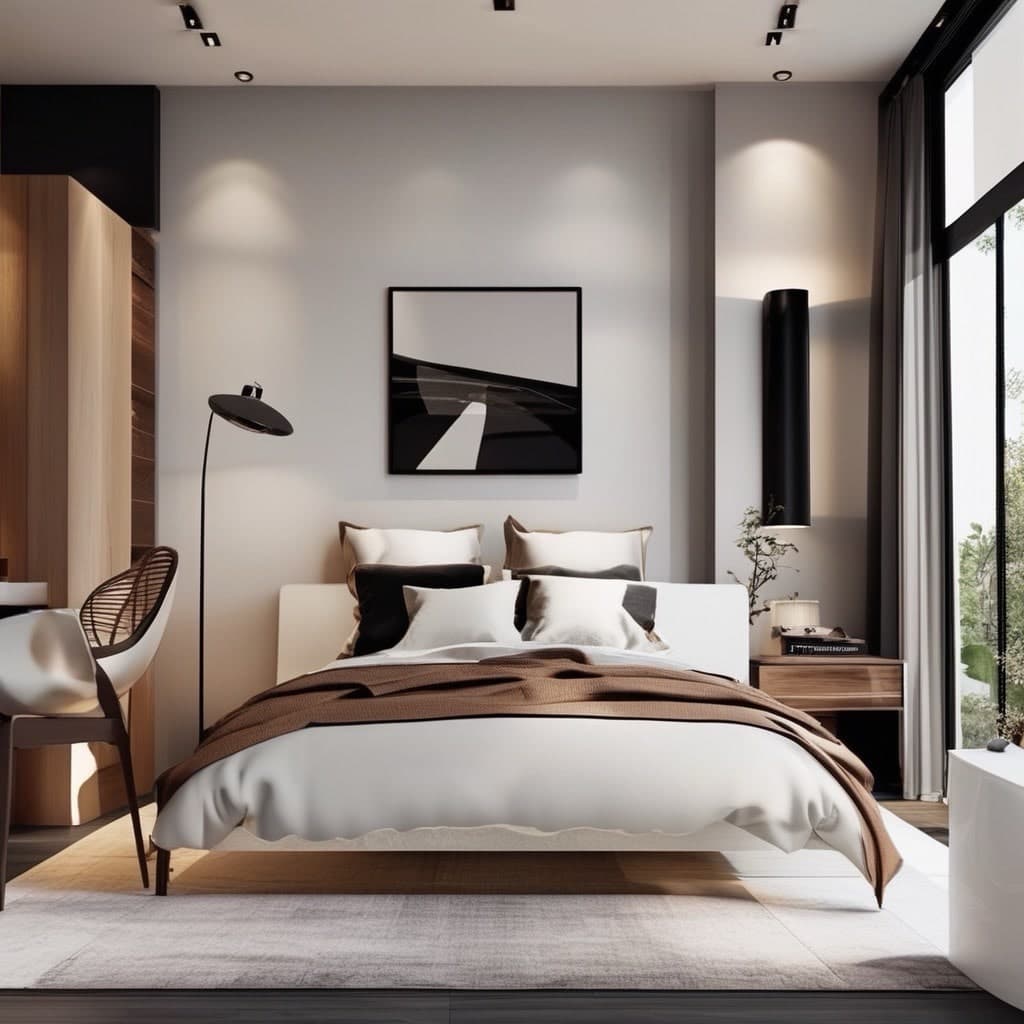
Modern vs contemporary vs minimalist
These three get mixed up constantly. They overlap, but they are not the same.
| Modern | Contemporary | Minimalist | |
|---|---|---|---|
| What it is | A specific look rooted in early to mid 20th century design. | Whatever is current. It changes with trends. | A way of designing: remove everything that is not needed. |
| Lines and shapes | Clean, geometric, sometimes organic curves. | Smooth and current, often softer curves. | Very simple, nothing decorative. |
| Colors | Neutrals with one or two bold accents. | Neutral base, often with trend colors. | Mostly white, grey and one or two quiet tones. |
| Materials | Wood, leather, glass, steel, concrete. | Mixed and current: metals, stone, textured fabrics. | A few natural materials, kept plain. |
| Feel | Structured, functional, timeless. | Fresh and of the moment. | Calm and empty. |
If you want a look that stays put, modern is a safer bet than contemporary because it does not chase trends. If you want the calmest possible room, see our minimalist guide. For the current take, see contemporary, and for the warm wood-and-legs version of modern, see mid-century modern.
The features that make a room look modern
Clean lines
Straight edges and simple geometry. Furniture has few visible details: no carved feet, no heavy trim.
Open, uncluttered space
Modern rooms breathe. Surfaces are mostly clear and each object has room around it.
Neutral base, bold accent
White, grey, black, beige or warm wood as the foundation, with one strong color or material used sparingly.
Honest materials
Wood that looks like wood, metal that looks like metal, glass, leather, concrete. Little pretending or faux finish.
Function first
Every piece should do a job. Storage is built in or hidden so it does not fight the shape of the room.
Statement lighting
A sculptural pendant or floor lamp is often the one decorative object in a modern room.
Modern color palettes
Modern is not automatically black and white. The best modern rooms use a restrained palette and let materials add the warmth.
- -Warm neutrals. Warm white, sand, greige and light oak keep the room bright and welcoming, and are the easiest place to start.
- -Black accents. Thin black frames, a black metal leg or a dark lamp add definition. Use it in small amounts.
- -One bold color. A deep green, rust, cobalt or mustard armchair or artwork gives the room a point of focus. Keep the rest quiet.
- -Tone on tone. Layer several shades of the same color for depth without adding visual noise.
A widely used guideline is roughly 60 percent a dominant neutral, 30 percent a secondary color and 10 percent an accent. Want to try colors before you commit? Pull a palette from a photo with the color palette tool, or test paint on your own walls with the paint color visualizer.
Modern furniture and materials
- -Sofas: low, straight-lined and simple, in leather, wool or tight-weave fabric. Avoid heavy rolled arms and tufting.
- -Tables: wood, glass or stone tops on slim metal or wooden legs. A simple coffee table with clear lines beats an ornate one.
- -Chairs: a designer lounge or accent chair with a strong shape is a classic way to add personality.
- -Storage: flat-fronted cabinets with handle-free or minimal hardware, wall-mounted units, and open shelving kept tidy.
- -Floors and walls: wood or polished concrete floors, plain painted walls, and a single accent wall if you want more contrast.
- -Textiles: solid or subtly textured. Bold pattern is rare; texture provides the interest instead.
How to get the look, room by room
Living room
Choose one main sofa with clean lines, one or two accent chairs, a simple coffee table and a rug in a solid or subtle pattern. Add a sculptural lamp and keep the surfaces clear. See how a living room changes with AI living room design.
Bedroom
A low platform bed, plain bedding in two or three tones, matching simple nightstands and one piece of art. Keep clutter off the surfaces. Try AI bedroom design to see the look on your own room.
Kitchen
Flat-panel cabinets, minimal hardware, a single countertop material and good under-cabinet lighting. Read more in our kitchen page.
Bathroom
Large-format tiles, a floating vanity, simple fixtures in one finish, and plenty of clear surface. Explore AI bathroom design.
Modern design mistakes
- -Making it cold. Too much white, glass and metal feels like a showroom. Add warmth with wood, wool, linen and warm lighting.
- -Buying a matched set. A room that is all one collection looks flat. Mix two or three materials and eras.
- -Forgetting texture. A modern room with no texture can look sterile. Use a wool throw, a textured rug or a wood grain.
- -Too many accents. Modern relies on restraint. One bold color or material is enough.
- -Clutter. The style depends on clear surfaces, so give everything a place to live or edit it out.
Try a modern look on your own room
A modern room can look wonderful in a photo and wrong in your room, because light, ceiling height and window size change everything. The reliable way to check is to try it on your own space. Upload a photo to Decoratly, choose a modern style and see your real room redesigned in about 30 seconds, with your walls, windows and proportions kept. Compare it with warmer options like Scandinavian or Japandi, and pick the one that suits the room.
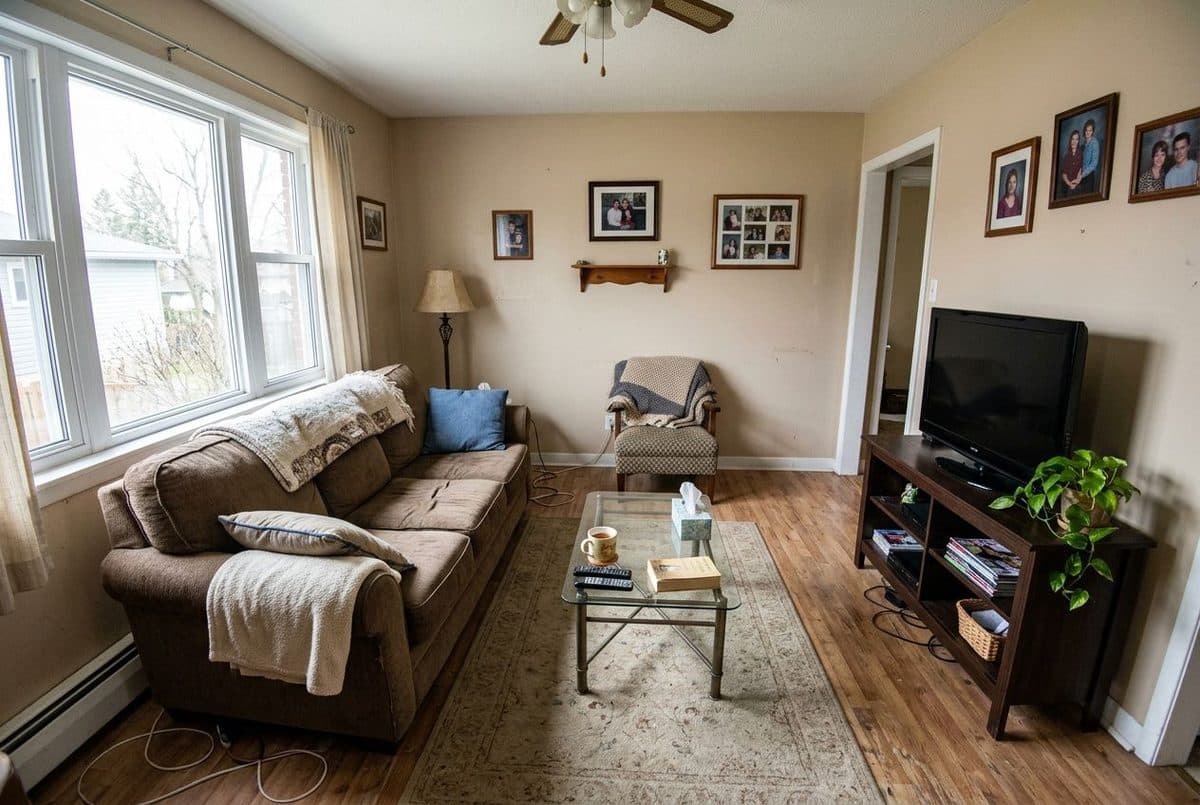
Before
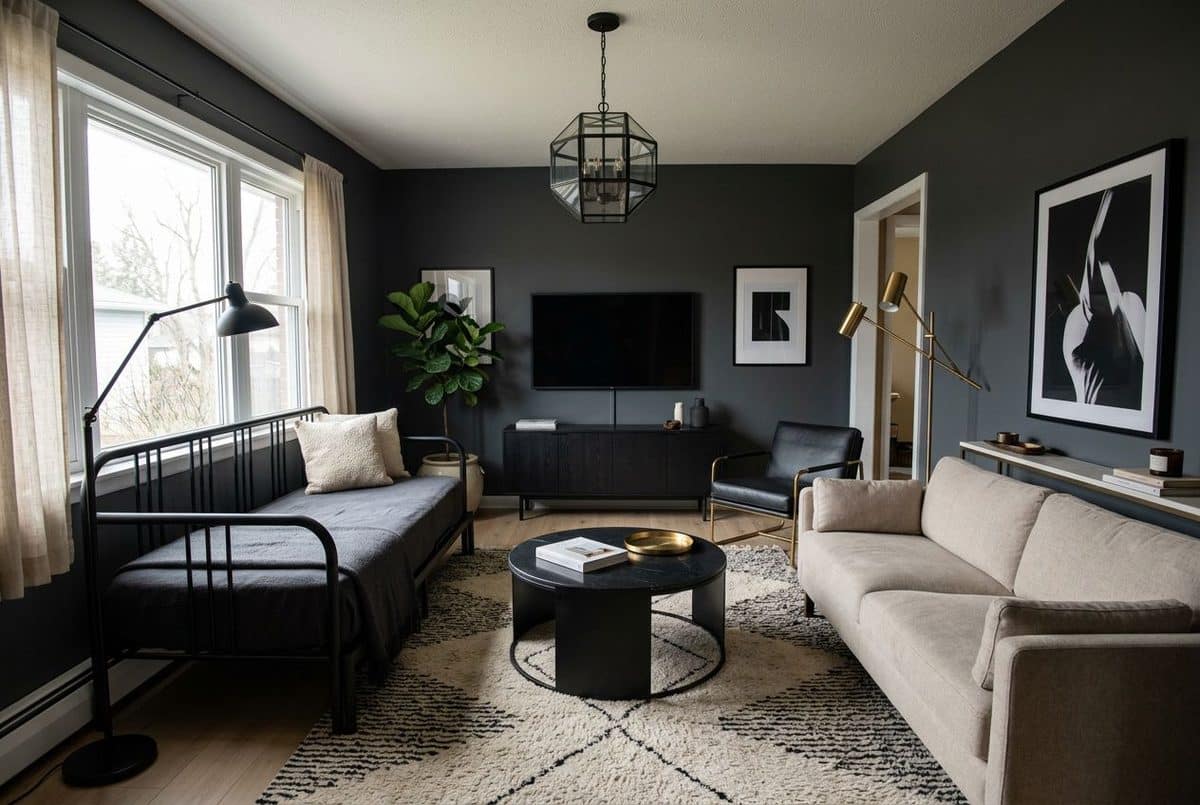
After