
Japandi Interior Design - Upload a Photo, See It Free
Upload a photo of your room and see it transformed with Japandi style instantly. Warm whites, natural wood, wabi-sabi calm - see YOUR space in the style with AI. Try 1 design free, no signup required.
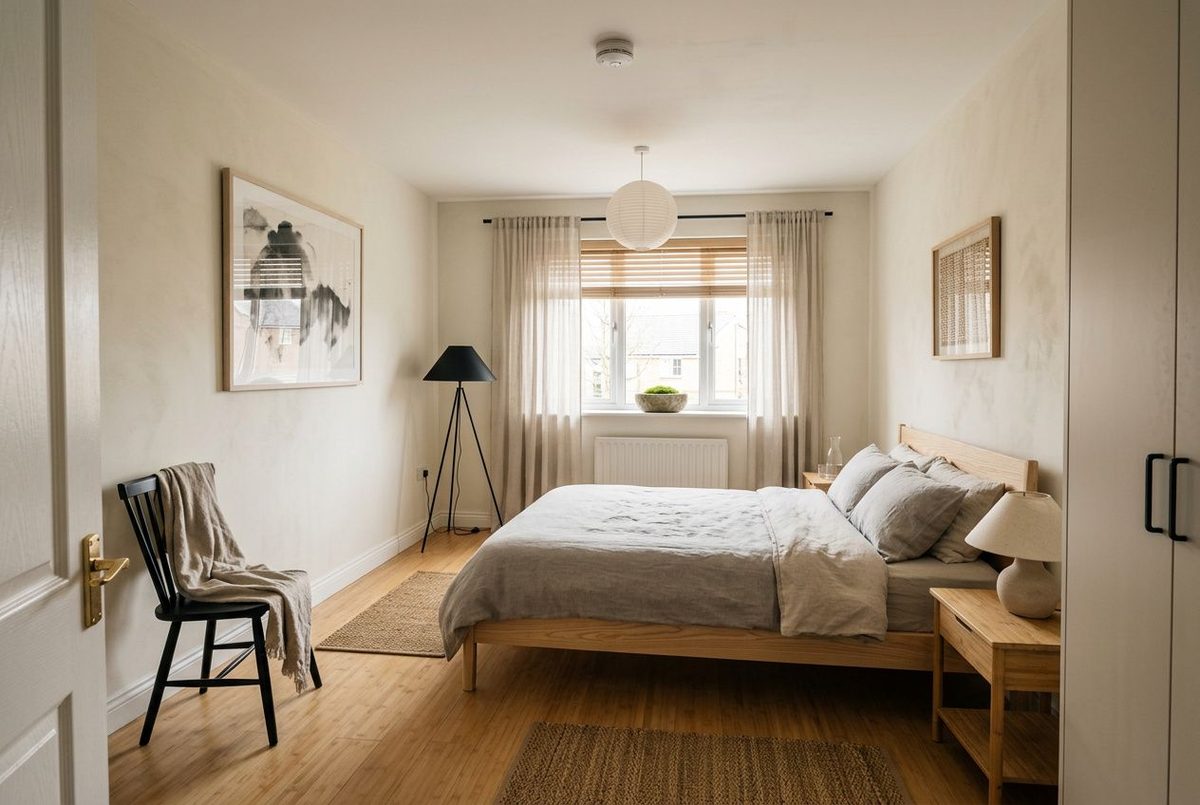
Japandi bedroom, redesigned with Decoratly
What Is Japandi Interior Design?
Japandi combines two design traditions that share a quiet common ground: Japanese minimalism, with its wabi-sabi appreciation for natural, imperfect materials and deliberate empty space, and Scandinavian design, with its warmth, function and love of light wood. The result favors calm over statement, and texture over pattern.
In practice that means warm white or soft gray walls, natural wood left visible, linen textiles, and a handful of well-chosen objects rather than a fully decorated surface. Black metal accents add quiet contrast without breaking the calm.
Key Elements of Japandi
- Warm white and soft gray: walls and larger surfaces stay neutral and calm.
- Natural wood, visible grain: light oak through warmer walnut, left unpainted.
- Bamboo and rattan: woven texture on lighting, blinds or small furniture.
- Linen and cotton textiles: soft, matte fabrics rather than shiny or heavily patterned ones.
- Subtle black accents: a lamp, a frame or hardware, used sparingly for contrast.
- Deliberate empty space: fewer objects, each one chosen on purpose.
How to Get the Look
- Simplify the walls: warm white or soft gray, with one piece of understated art rather than a gallery wall.
- Choose one wood tone: a light or mid-toned wood, kept consistent across furniture.
- Layer in linen: curtains, cushions or bedding in a soft, matte texture.
- Add one woven piece: a bamboo blind, rattan shade or woven basket for texture.
- Pick a single black accent: a floor lamp or picture frame, not several.
- Edit down: remove anything that doesn't earn its place - Japandi reads as calm because there is genuinely less in the room.
Mistakes to Avoid
- Mixing too many wood tones - pick one and stay with it across the room.
- Treating it as identical to Scandinavian - Japandi is warmer, quieter and more neutral, not bright white with color pops.
- Adding black accents everywhere - one or two pieces read as intentional; more starts to look like a different style entirely.
- Leaving the room feeling empty rather than calm - a few well-placed textiles and one plant keep it from feeling cold.
See It on Real Rooms
Four rooms redesigned in Japandi style using Decoratly's own style prompt - the same one available in the app.
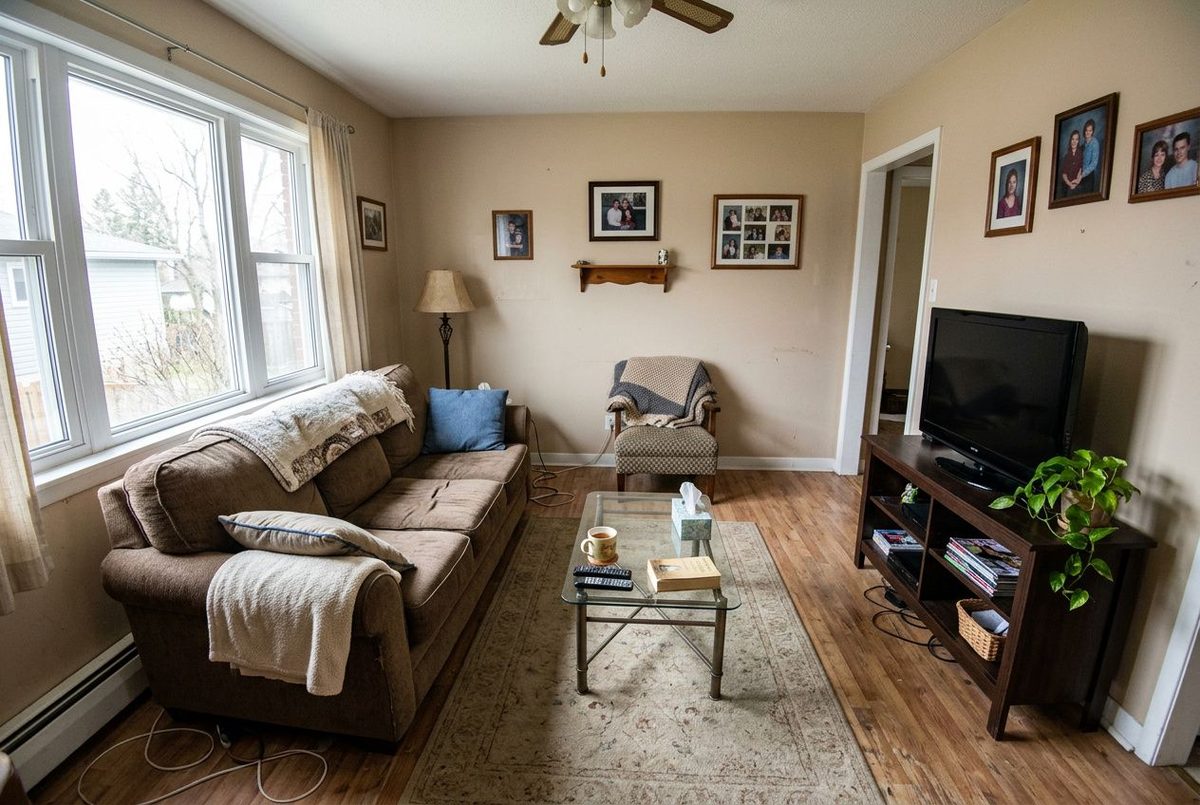
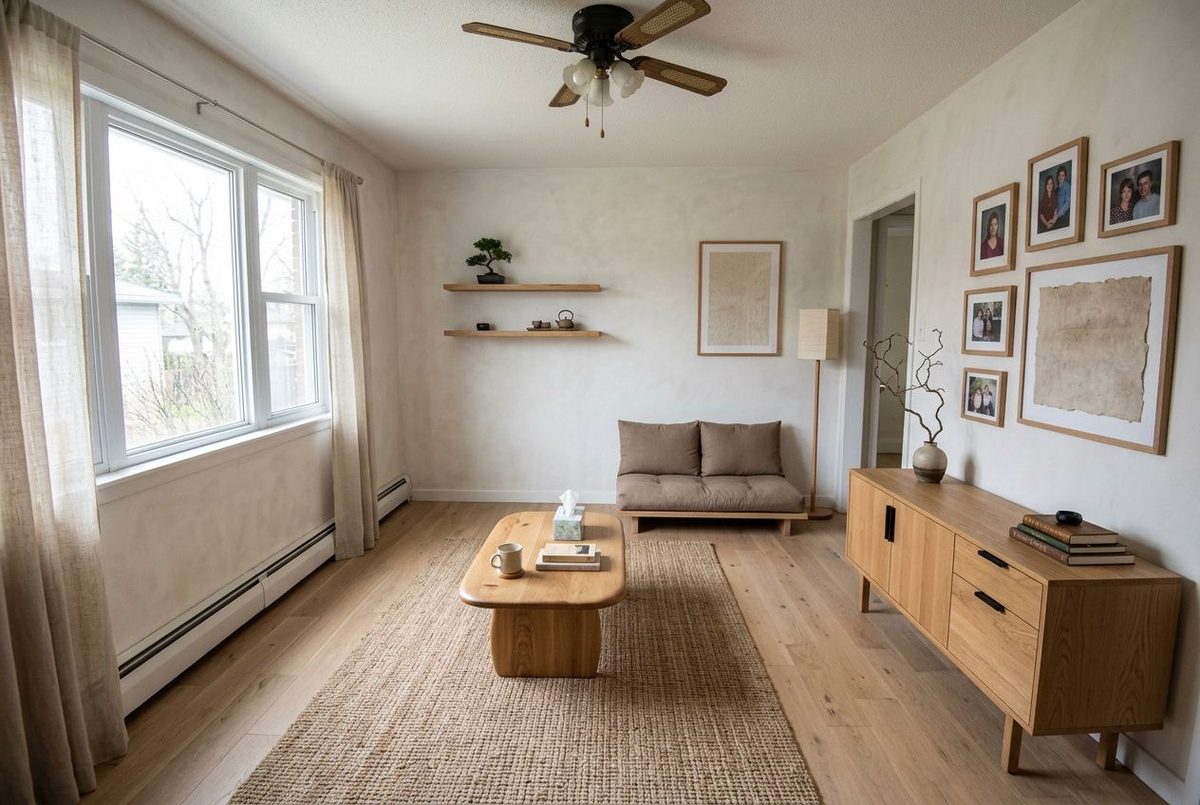
Living room: before / after
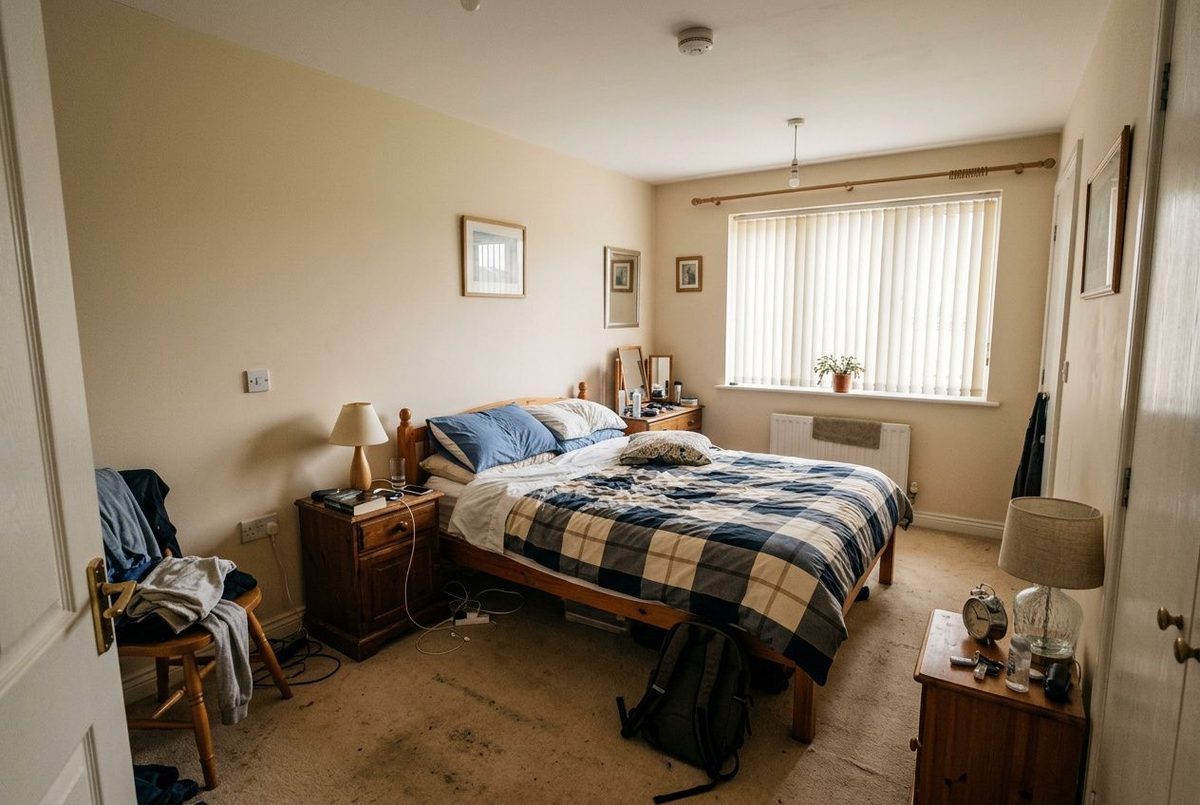
Bedroom: before / after
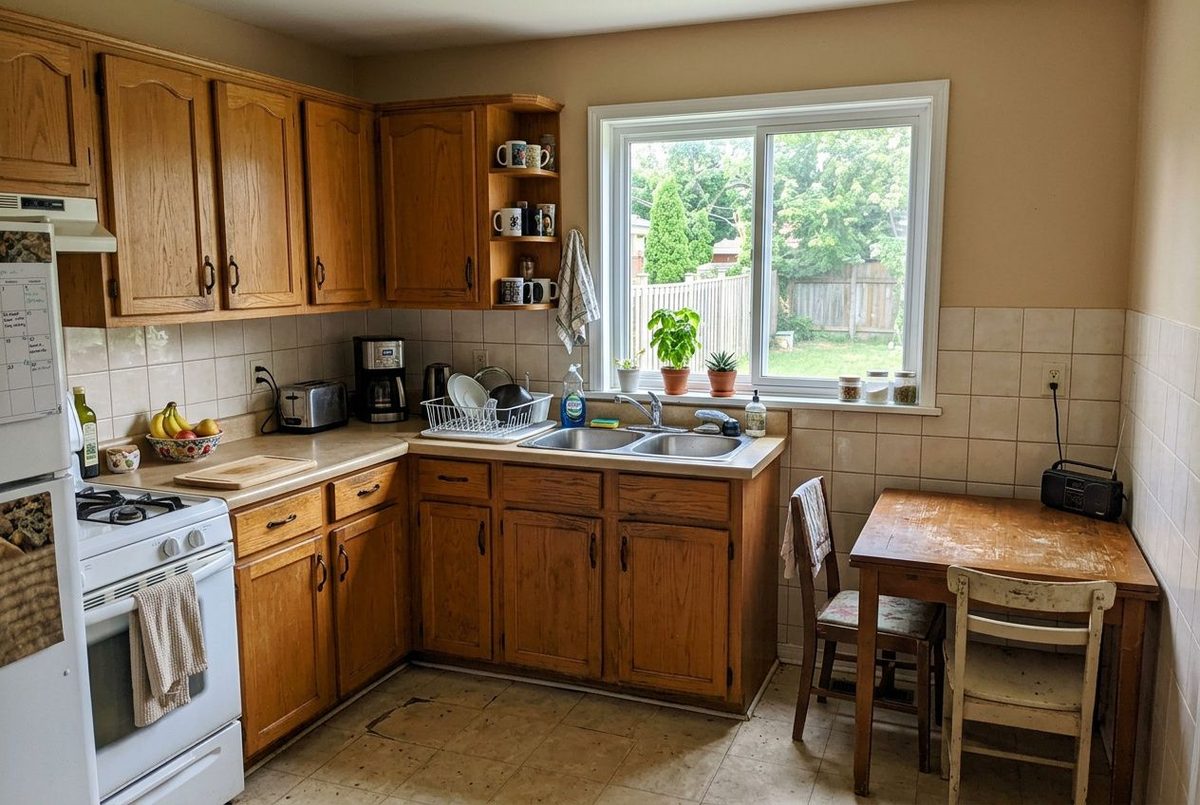
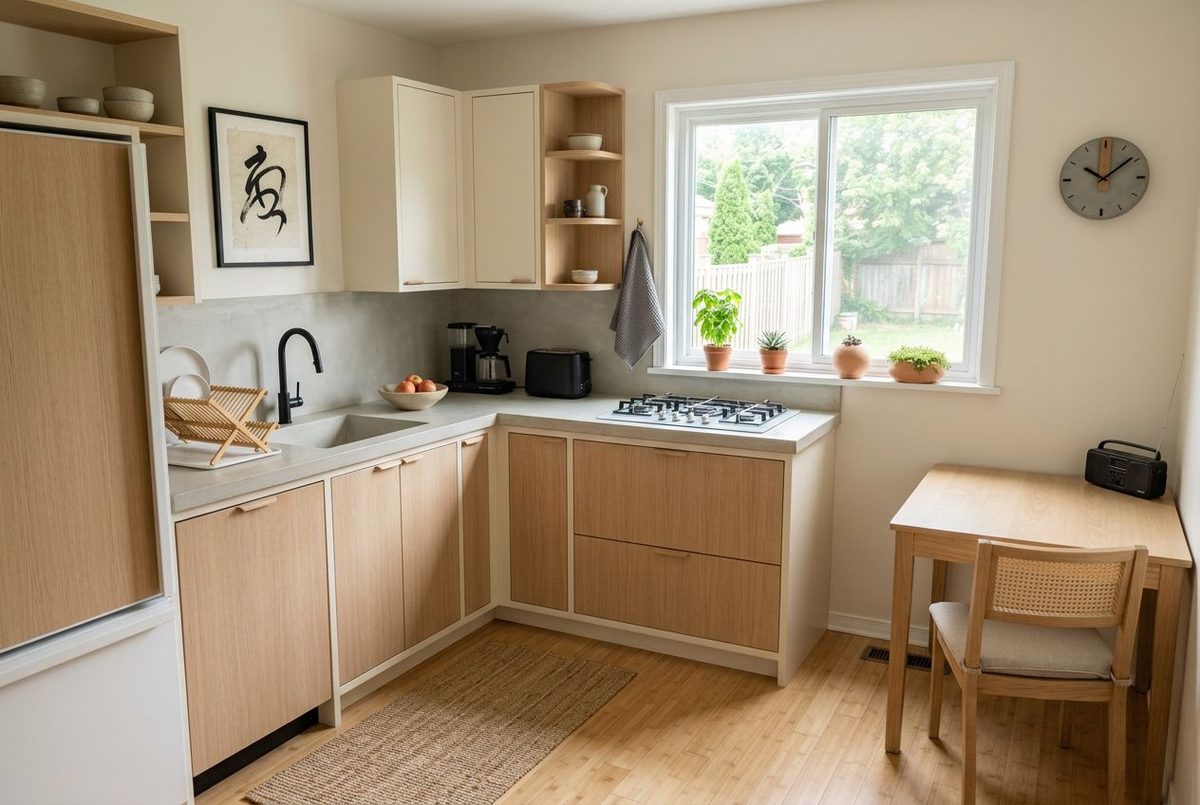
Kitchen: before / after
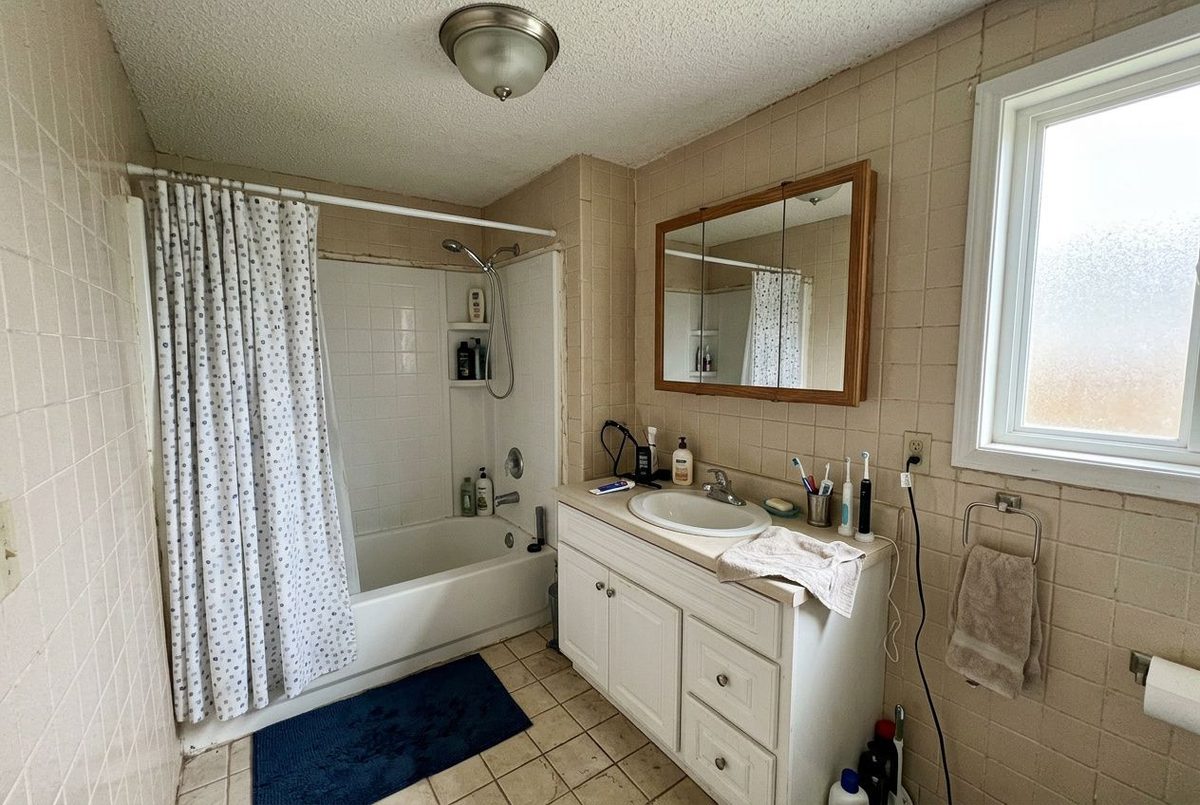
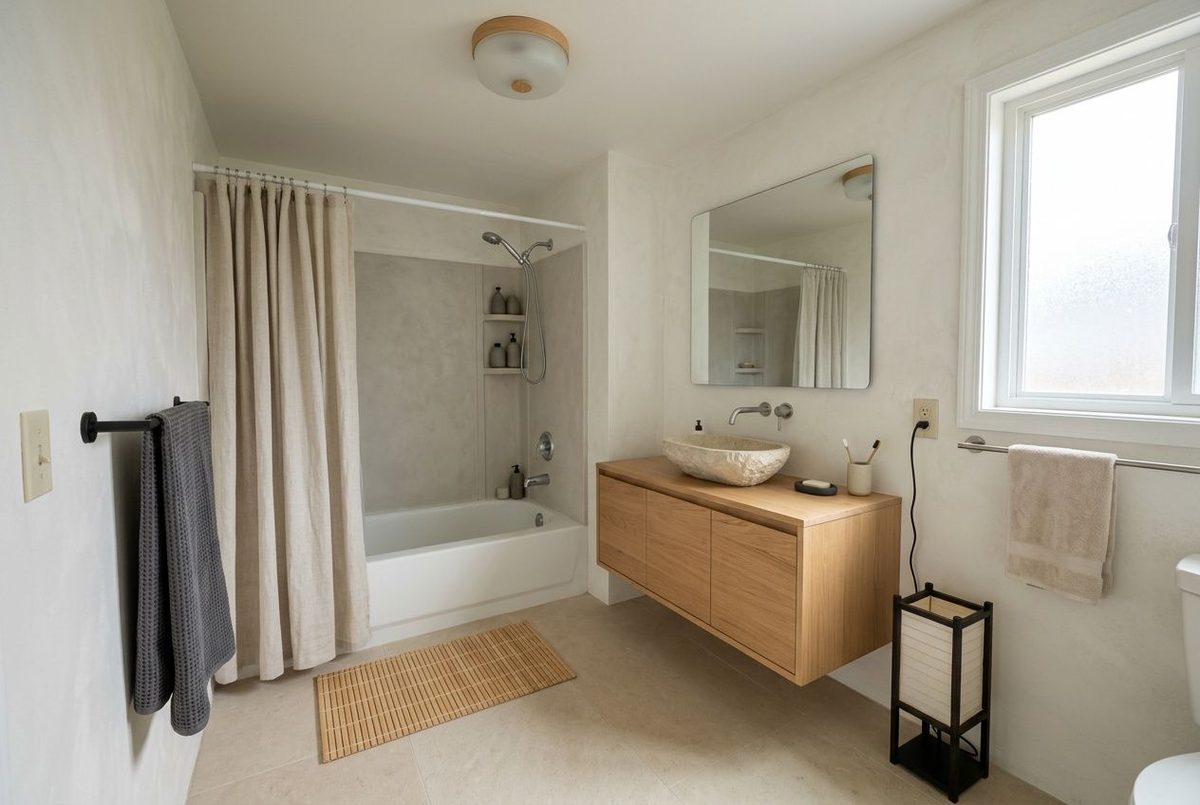
Bathroom: before / after
Example rooms are AI-generated. Each redesign was made with Decoratly, using the same Japandi style available in the app.
Japandi Interior Design: FAQ
What is Japandi interior design?
Japandi blends Japanese minimalism with Scandinavian coziness: warm whites and soft grays, natural wood and bamboo, linen textiles, and a small number of carefully chosen objects rather than many decorative ones. It draws on wabi-sabi - finding beauty in natural, slightly imperfect materials - alongside Scandinavian hygge warmth.
How is Japandi different from Scandinavian style?
Scandinavian design leans bright and white with pops of pastel color. Japandi is warmer and quieter: more neutral tones, more visible wood grain, subtle black accents, and a stronger emphasis on empty, deliberate space rather than cozy layering of textiles and color.
What colors and materials define Japandi?
Warm white and soft gray walls, natural wood tones (light oak to warmer walnut), bamboo and rattan, linen and cotton textiles, and small black metal accents for contrast. Materials are left visible and slightly textured rather than glossy or heavily processed.
Can I see my own room in Japandi style before I buy anything?
Yes. Upload a photo of your room to Decoratly and see it redesigned in Japandi style in about 30 seconds. You get 1 free AI redesign, no signup and no credit card required.
Does Japandi work in a small room?
It suits small rooms particularly well, since the style relies on restraint - fewer, better pieces and visible floor and wall space - rather than filling a room to feel finished.
See Your Room in Japandi Style
Upload a photo and see it redesigned with warm wood and calm, natural tones in about 30 seconds - free to try, no signup.
✓ 1 free transformation • ✓ No signup required • ✓ Results in 30 seconds
Written and maintained by Kamil Uhryn, founder of Decoratly. Last updated September 2026.